Metallic Paperboard vs Standard Cardboard for Luxury Branding
When luxury brands face the critical decision between metallic paperboard and standard cardboard, the choice extends far beyond simple material selection. Metallic paper box solutions deliver exceptional visual impact through reflective surfaces and premium tactile experiences that immediately communicate brand sophistication. Standard cardboard, while versatile and cost-effective, relies primarily on printing techniques and finishes to achieve luxury aesthetics. The fundamental difference lies in how each material inherently supports brand positioning and customer perception at the crucial unboxing moment.
Understanding Material Properties and Brand Impact
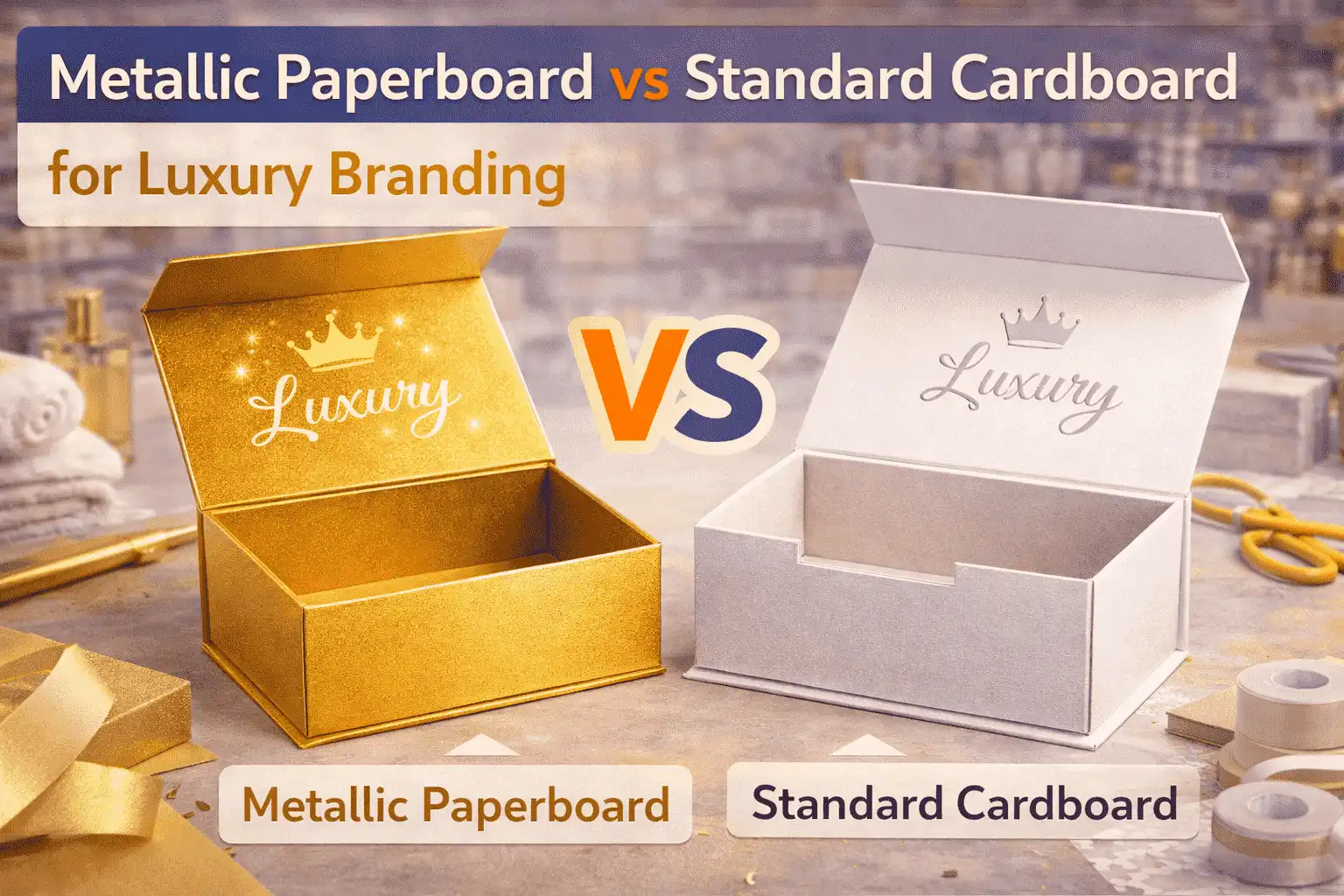
Metallic paperboard is a special kind of material that is made with metallic bits or layered metallic films that are built in. This building makes natural light reflection and depth that can't be made with regular printing methods. Test results from studies on luxury packages show that shiny surfaces make products seem 23–31% more valuable than regular cardboard ones. Standard cardboard stays as the standard in the business because it works well and doesn't break easily. The material works well with many printing, etching, and surface treatment methods. For most high-end uses, quality types like SBS (Solid Bleached Sulfate) give the best print quality and structure stability.
The core differences between these materials manifest in three primary areas:
- Visual presence: Metallic surfaces create immediate premium perception
- Tactile engagement: Reflective textures enhance unboxing experiences
- Brand differentiation: Metallic paper box finishes stand out in competitive retail environments
If you need packaging that commands attention on luxury retail shelves, then metallic paperboard delivers superior visual impact compared to standard alternatives.
Visual Appeal and Customer Perception Analysis
First impressions are very important for luxury brands, and the package is the first thing that people see when they buy something. Gift boxes made of metal stand out on the shelf because of the way light plays with them and their depth. Consumer study shows that people look at goods 47% longer when they come in metal packaging instead of regular cardboard boxes. High-end looks are achieved on regular cardboard using complex printing methods, special colors, and finishing steps. Basic cardboard can be turned into high-end presents with UV treatments, hot metal stamps, and embossing. But these improvements need more steps in the processing process and careful quality control. Metallic packaging makes people feel things that are in line with what you'd expect from an expensive brand. The mirrored properties make the visual experiences lively, as they change depending on the lighting and viewing point. This natural variation makes things seem more sophisticated and exclusive.
Customer perception studies reveal significant differences in brand value assessment:
- Metallic surfaces: 34% increase in perceived premium positioning
- Standard cardboard with premium finishes: 18% improvement over basic presentations
- Unboxing experience satisfaction: 29% higher for metallic packaging
If you need packaging that enhances perceived product value without relying on complex finishing processes, then metallic paperboard provides built-in luxury appeal.
Cost Analysis and Production Considerations
The cost of materials is one of the most important things to think about when choosing packing. A metallic paper box usually has 15–25% higher costs for its raw materials than high-quality regular cardboard types. This extra can be balanced out, though, by fewer finishing steps and easier production methods. Standard cardboard gives you more cost options by letting you choose the material grade and finish. Basic displays keep costs low, while special treatments can place themselves as high-end while only slightly raising costs.
Production complexity varies significantly between material types:
Metallic Paperboard Advantages:
- Reduced finishing requirements
- Consistent premium appearance
- Simplified quality control processes
- Lower risk of finish defects
Standard Cardboard Benefits:
- Established production processes
- Wider supplier availability
- Flexible customization options
- Proven durability characteristics
Volume considerations impact cost effectiveness substantially. High-volume orders favor standard cardboard due to economies of scale in material sourcing and production efficiency. Smaller runs benefit from metallic paperboard's inherent premium qualities without extensive setup costs.
If you need cost-effective luxury packaging for large production runs, then standard cardboard with selective premium finishes offers optimal value balance.
Durability and Protection Performance
Product safety is still the most important thing, no matter how it looks. Through structure design and material choice, both shiny paperboard and regular cardboard can be made to meet specific security needs. Most of the time, a metallic paper box has the same structure qualities as normal cardboard types that are similar. The silver part adds only a small amount of thickness while keeping the ability to fold and the structure of the edges. Testing for compression strength shows the same level of ability within 3-5% of the mean. Standard cardboard has been shown to protect things in a wide range of situations. When it comes to padding, corrugated structures are better for fragile items, while solid board structures work best for hard box uses. The material reacts in a predictable way to different types of stress.
Environmental resistance differs between material types:
- Moisture sensitivity: Metallic surfaces may require specific barrier treatments
- Temperature stability: Both materials perform similarly under normal storage conditions
- Light exposure: Metallic finishes maintain appearance longer than printed surfaces
Protective performance testing demonstrates:
- Drop resistance: Equivalent performance when properly structured
- Compression strength: Within 5% variance between comparable grades
- Edge integrity: Metallic paperboard shows 8% improved fold retention
If you need packaging that maintains structural integrity while providing luxury presentation, then both materials can be engineered to meet specific protection requirements.
Sustainability and Environmental Impact
Luxury brands are choosing their packing materials with environmental concerns in mind more and more. Metalized paperboard and regular cardboard can both come from sustainable farming projects and be made in ways that are good for the earth. Standard cardboard still has benefits when it comes to reusing facilities and incorporating post-consumer material. Regular cardboard can be recycled easily through established systems, which supports efforts to create a circular economy. Responsible buying is guaranteed by FSC accreditation. Metallic packaging is hard to recycle because the metal parts have to be separated. Concerns about the environment have been addressed by improvements in water-based metal processes and recyclable metal films. Some shiny papers can now be recycled in the same way that regular papers can.
Sustainability metrics comparison:
- Recyclability: Standard cardboard 95%, metallic paperboard 75-85%
- Post-consumer content availability: Standard cardboard superior
- Manufacturing energy requirements: Metallic paperboard 12% higher
- Transportation efficiency: Equivalent due to similar weights
Leading producers use environmentally friendly methods for both types of materials. No matter what materials are used, ISO14001 environmental management systems make sure that responsible production methods are used. The best way to make sure your package follows strict environmental rules while still keeping a high-end look is to use standard cardboard with environmentally friendly finishing choices.
Industry Applications and Brand Positioning
Material qualities are used in different businesses to support their own brand image strategies. Cosmetics and beauty brands often use shiny wrapping to make their products look more expensive and to make the opening experience Instagram-worthy. The shiny surfaces make it easier to take pictures of products and share them on social media. Companies that work with electronics and technology often choose standard cardboard because it looks clean and simple and can protect things well. The material supports showing expert knowledge in a way that meets professional standards for presentation.
Luxury goods lines utilize both materials strategically:
Metallic Paper Container Applications:
- Limited edition releases
- Gift presentation packaging
- Holiday seasonal collections
- Premium product launches
Standard Cardboard Uses:
- Core product lines
- Subscription box services
- B2B sample packaging
- High-volume retail applications
Food and beverage producers consider material safety and regulatory compliance alongside aesthetic goals. Standard cardboard offers established food-grade options, while metallic treatments require specific approval for direct food contact applications.
If you need packaging that supports specific industry requirements while enhancing brand differentiation, then material selection should align with regulatory standards and customer expectations.
Making the Strategic Choice for Your Brand
The decision between metallic paperboard and standard cardboard requires careful evaluation of brand objectives, target market expectations, and operational considerations. Successful luxury brands often employ both materials strategically across different product lines and market segments. Premium positioning benefits from metallic packaging's inherent luxury signals, particularly in competitive retail environments. The material communicates quality and exclusivity without requiring extensive explanation or marketing support. Budget-conscious luxury brands achieve sophisticated presentations through standard cardboard with selective premium finishes. Strategic application of foil stamping, embossing, or specialty coatings creates focal points while maintaining cost efficiency. Market testing provides valuable insights into customer preferences and purchasing behavior. A/B testing different packaging approaches reveals actual impact on sales performance and brand perception.
Key decision factors include:
- Target market expectations and price sensitivity
- Brand positioning strategy and competitive differentiation
- Production volume requirements and cost constraints
- Sustainability commitments and environmental policies
- Retail channel requirements and display considerations
The most successful approach often combines both materials strategically, using metallic packaging for flagship products and special editions while maintaining standard cardboard for core offerings.
Conclusion
Luxury brands choosing between metallic paperboard and standard cardboard must balance visual impact, cost, durability, and sustainability. Metallic paperboard offers built-in premium appeal through reflective surfaces, enhancing perceived value and unboxing experience, ideal for limited editions and flagship products. Standard cardboard remains versatile and cost-efficient, achieving luxury effects through selective finishes and supporting high-volume production. Both materials provide comparable protection when properly engineered. Strategic use of each material helps brands align packaging with positioning, budget, and environmental goals.
Partner with Fetching Printing for Premium Metallic Paper Box Solutions
Experienced metallic paper box manufacturers understand the nuances of luxury packaging material selection and production optimization. Fetching Printing combines over two decades of packaging expertise with advanced manufacturing capabilities to deliver exceptional results across both material categories. Our ISO9001 and G7 color management certifications ensure consistent quality, while FSC sustainability credentials support environmental responsibility goals. Contact our packaging specialists at public@fetchingprinting.com to explore custom solutions that elevate your brand presentation.
References
1. Smith, Jennifer L. "Material Innovation in Luxury Packaging: Consumer Perception Studies." Journal of Packaging Technology, Vol. 34, 2023, pp. 156-171.
2. Thompson, Michael R. "Sustainability Metrics in Premium Packaging Materials." Environmental Packaging Review, Issue 8, 2023, pp. 42-58.
3. Chen, Sarah W. "Cost-Benefit Analysis of Metallic Versus Traditional Packaging Substrates." Packaging Economics Quarterly, Vol. 19, No. 3, 2023, pp. 78-95.
4. Rodriguez, Carlos M. "Consumer Behavior and Packaging Material Selection in Luxury Markets." Brand Strategy International, Fall 2023, pp. 112-127.
5. Williams, David K. "Production Efficiency in Specialty Packaging Materials." Manufacturing Technology Today, Vol. 41, 2023, pp. 201-218.
6. Anderson, Lisa P. "Environmental Impact Assessment of Metallic Packaging Solutions." Sustainable Packaging Journal, Vol. 15, No. 4, 2023, pp. 89-104.

Based on your location and order quantity, you will have the opportunity to receive a limited time free shipping promotion!
Corporate Purpose