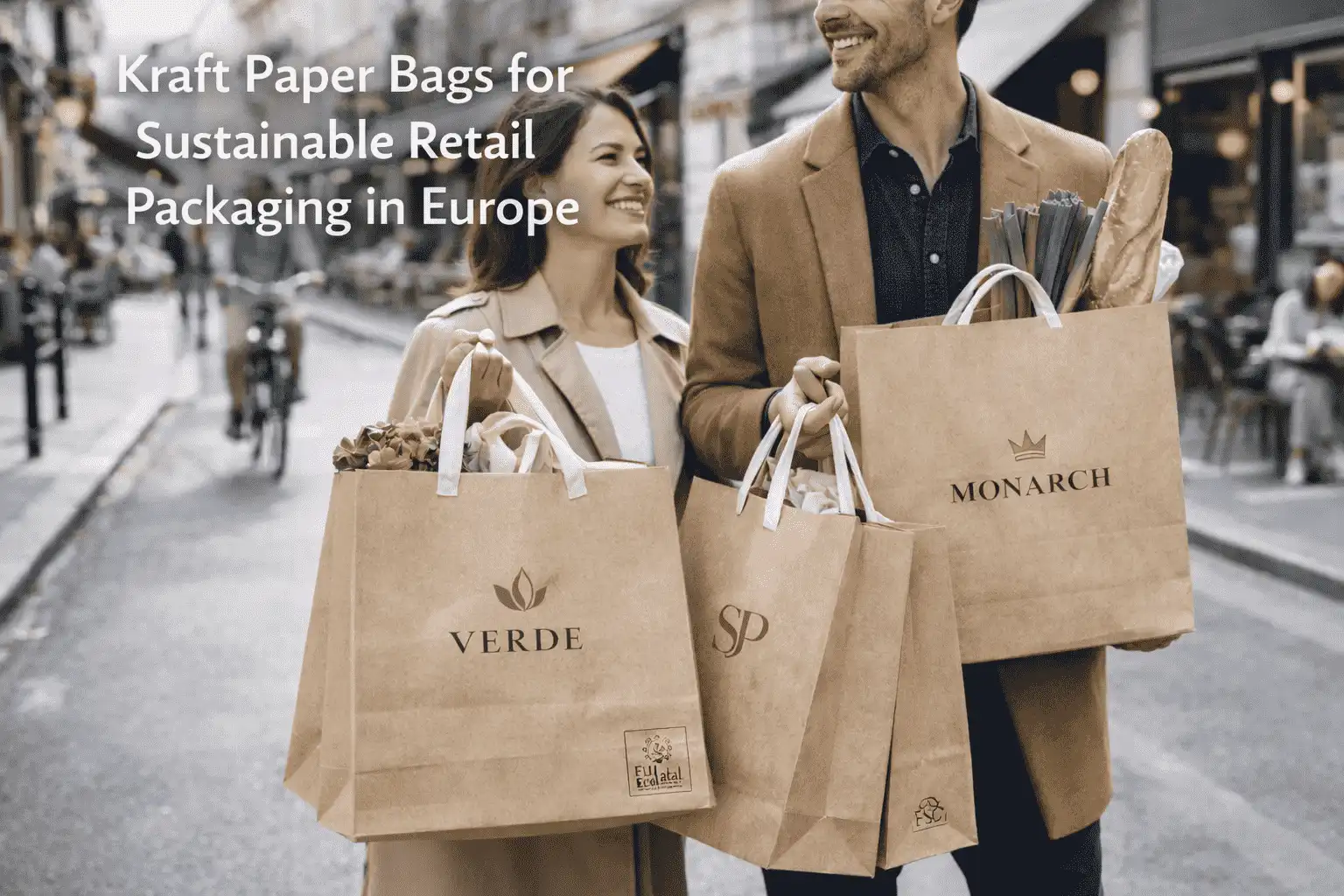
Kraft Paper Bags for Sustainable Retail Packaging in Europe
European retailers face mounting pressure from consumers and regulators to eliminate single-use plastics while maintaining brand appeal and operational efficiency. The kraft paper bag emerges as the solution that reconciles environmental responsibility with premium presentation, offering biodegradable functionality without compromising the unboxing experience that drives customer loyalty. This comprehensive guide explores how kraft paper bags are transforming retail packaging across Europe, delivering measurable sustainability outcomes alongside the visual impact brands demand.
Why European Retailers Are Switching to Kraft Paper Bags?
European retail environments have undergone a fundamental transformation in packaging expectations over the past five years. Regulatory frameworks such as the EU Single-Use Plastics Directive and national plastic bag bans have created compliance imperatives that traditional packaging cannot satisfy. The kraft paper bag addresses these regulatory requirements while simultaneously responding to consumer sentiment, where seventy-three percent of European shoppers report actively seeking brands that demonstrate environmental commitment through packaging choices. Unlike plastic alternatives that create reputational risk and potential fines, kraft paper bags position retailers as sustainability leaders while maintaining the structural integrity required for diverse product categories from fashion to gourmet foods. The economic case for kraft paper bags extends beyond regulatory compliance. Retailers report reduced packaging costs when transitioning from multi-material laminated solutions to kraft paper bag systems, particularly when leveraging the material's natural printability. Brown kraft paper retains its unbleached wood pulp composition, creating an authentic organic aesthetic that resonates with European consumers' preference for minimalist, earth-conscious design. This natural appearance eliminates the need for excessive printing coverage, reducing ink consumption and accelerating production timelines. Premium retailers combine this rustic foundation with selective spot varnishing or foil stamping, creating visual hierarchy that draws attention to brand elements while preserving the eco-authentic overall impression that European markets value.
Material Options for European Market Requirements
European retailers require kraft paper bag specifications that balance environmental certification with performance characteristics suited to varied climatic conditions and product weights. Brown kraft paper manufactured from unbleached wood pulp provides exceptional tensile strength and tear resistance, critical attributes for retailers managing high-volume transactions across diverse store formats. The material's slightly coarse surface texture communicates authenticity while providing sufficient moisture resistance when treated with food-safe coatings, enabling deployment across grocery, specialty food, and quick-service restaurant applications. Retailers serving premium segments often specify FSC-certified kraft paper, demonstrating supply chain traceability that satisfies both corporate sustainability reporting requirements and consumer expectations for verified environmental claims. SBS C1S and SBS C2S substrates offer alternatives for retailers requiring brighter white surfaces that showcase full-color graphics while maintaining recyclability. These virgin bleached pulp boards feature clay coatings that deliver offset printing reproduction quality, supporting complex brand guidelines and promotional campaigns. The coated surface accepts specialty finishes including UV coating, embossing, and hot foil stamping, enabling luxury retailers to create kraft paper bags that function as portable brand ambassadors. Despite their premium appearance, SBS boards maintain compatibility with European recycling infrastructure when produced without plastic lamination, addressing the circular economy principles embedded in EU packaging regulations.
CCNB substrates provide cost-effective solutions for retailers balancing sustainability commitments with budget constraints. Manufactured from recycled newsprint with a clay-coated printing surface, CCNB kraft paper bags deliver acceptable print quality at significantly reduced material costs compared to virgin fiber alternatives. The grey recycled backing visible on bag interiors reinforces the sustainability narrative, creating visual evidence of recycled content that resonates with environmentally conscious consumers. Retailers deploying CCNB across non-food applications report successful brand positioning as sustainability innovators while achieving packaging cost reductions that improve overall category margins.
Customization Features That Drive Brand Recognition
European retail markets demand kraft paper bag customization that transforms functional packaging into experiential brand touchpoints. Handle selection significantly influences both user experience and brand perception, with options ranging from economical twisted paper handles to premium cotton rope or satin ribbon configurations. Twisted paper handles manufactured from kraft or recycled paper strands provide load-bearing capacity suitable for retail weights up to five kilograms while maintaining complete recyclability as a single-material system. The rope-like structure distributes weight evenly across the bag's top edge, preventing handle pull-through failures that create negative customer experiences. Color customization allows retailers to match handles precisely to brand palettes, creating cohesive visual systems across packaging, store environments, and digital touchpoints. Cotton rope handles elevate kraft paper bags into premium positioning territories, offering superior comfort through soft braided construction that won't create hand fatigue during extended carrying. The natural fiber composition aligns with sustainability narratives while accepting vibrant dyes that maintain colorfastness through repeated handling. Luxury retailers combine cotton handles with SBS kraft paper bag substrates and metallic foil accents, creating packaging that customers perceive as gift-worthy, extending the bag's lifecycle beyond single-use into reusable home storage applications. This extended utility amplifies brand exposure while demonstrating functional sustainability that European consumers value above symbolic environmental gestures.
Die-cut handles present minimalist alternatives that eliminate separate handle materials entirely, punching geometric openings directly into the kraft paper bag's top panel. This integrated approach reduces material consumption and assembly complexity while creating contemporary aesthetics that appeal to design-conscious European markets. Properly engineered die-cut dimensions distribute carrying loads across reinforced zones, preventing tear-through while maintaining clean visual lines. The single-material construction simplifies recycling sorting, ensuring kraft paper bags with die-cut handles integrate seamlessly into municipal waste management systems across European jurisdictions with varying recycling infrastructure capabilities.
Printing Technologies for Maximum Visual Impact
CMYK offset printing remains the foundation for kraft paper bag graphics across European retail applications, delivering photo-quality image reproduction and smooth gradient transitions essential for complex brand systems. The four-color process overlay accurately reproduces packaging designs across large production runs, ensuring color consistency that maintains brand integrity whether customers shop in Munich, Milan, or Manchester. Modern offset presses achieve registration tolerances below point-one millimeters, supporting fine typography and intricate pattern work that elevates kraft paper bags beyond commodity packaging into designed objects that customers notice and remember. Pantone spot color systems provide the color fidelity required for corporate identity applications where exact brand color matching supersedes cost considerations. Pre-mixed proprietary ink formulas identified by standardized PMS codes ensure that a retailer's signature green or burgundy appears identical across kraft paper bags produced in different facilities or time periods. This consistency proves critical for multi-market European retailers managing packaging procurement across franchised or licensed operations, where brand guidelines enforcement determines whether packaging reinforces or dilutes brand equity. Spot colors deliver solid, dot-free coverage in single press passes, creating the saturated color fields and crisp logo reproduction that characterize professional brand execution.
Surface finishing techniques transform printed kraft paper bags into premium packaging that commands attention in competitive retail environments. UV coating applies liquid polymer that cures under ultraviolet light, creating high-gloss spot accents that contrast dramatically against matte kraft substrates. Retailers deploy spot UV selectively on logos, product photography, or decorative elements, creating tactile dimension that invites customer interaction while protecting high-traffic graphic zones from scuffing. Embossing and debossing add physical depth to kraft paper bag surfaces, using metal dies to raise or recess design elements that customers perceive through touch as well as vision. These multi-sensory techniques create memorable unpackaging experiences that drive social media sharing and word-of-mouth recommendation, extending marketing impact beyond the point of sale.
Production Process Excellence for European Standards
European retailers require kraft paper bag manufacturing partners who demonstrate process control capabilities that ensure consistent quality across high-volume production runs. The production sequence begins with printing, where offset, digital, or flexographic presses transfer designs onto kraft paper or board substrates according to approved color standards and registration specifications. Digital printing technologies offer rapid setup and economical short runs ideal for seasonal promotions or limited-edition collaborations, while offset printing delivers the unit cost efficiency required for core product line packaging with annual volumes exceeding one hundred thousand units. Flexographic printing serves corrugated kraft applications where substrate texture would challenge offset registration, using flexible polymer plates that conform to surface variations while maintaining acceptable print quality. Surface finishing operations enhance and protect printed kraft paper through coating and lamination processes that extend packaging durability without compromising recyclability. Water-based varnishes provide environmentally preferable alternatives to solvent systems, delivering adequate scuff resistance for retail handling while maintaining biodegradability that satisfies European packaging waste regulations. Aqueous coatings dry rapidly through absorption and evaporation, enabling inline application during printing operations that reduce production lead times. Retailers specifying premium positioning may request film lamination that bonds clear polymer layers to printed kraft, creating moisture barriers essential for products requiring humidity protection. However, laminated kraft paper bags typically exit recyclable waste streams, creating sustainability trade-offs that require careful consideration against product protection requirements.
Die-cutting operations use precision metal dies to cut kraft paper bags to final dimensions, create handle openings, or add decorative windows that showcase products. Computer-controlled die-cutting equipment achieves tolerances below half a millimeter, ensuring consistent bag dimensions that integrate smoothly into automated packaging lines or manual assembly workflows. Complex die designs incorporate scoring rules that create fold lines, enabling flat kraft paper sheets to transform into three-dimensional bag structures through subsequent folding operations. The die-cutting stage determines structural integrity, as properly designed cuts and scores distribute stress away from weak points that could fail under loaded conditions.
Quality Assurance and Certification Requirements
European retail packaging procurement increasingly mandates third-party certifications that verify environmental claims and manufacturing ethics. FSC certification confirms kraft paper originates from responsibly managed forests that maintain biodiversity, protect indigenous rights, and support local communities. The chain-of-custody verification traces fiber sources through manufacturing stages, providing documentation that satisfies corporate sustainability reporting frameworks and consumer skepticism regarding greenwashing. Retailers promoting FSC-certified kraft paper bags differentiate themselves from competitors making unsubstantiated environmental assertions, building customer trust that translates into brand loyalty and premium pricing tolerance. ISO 9001 quality management certification demonstrates systematic process control that minimizes defect rates and ensures consistent output meeting customer specifications. European retailers managing complex supply chains across multiple markets rely on ISO-certified kraft paper bag manufacturers to deliver predictable quality that reduces receiving inspection requirements and prevents costly product recalls. The standard's emphasis on continuous improvement aligns with retailer expectations for partnership relationships where suppliers proactively identify enhancement opportunities rather than merely fulfilling purchase orders. ISO 14001 environmental management certification complements quality systems by documenting environmental impact reduction initiatives including energy efficiency, waste minimization, and emissions control, creating comprehensive manufacturing credentials that satisfy institutional procurement policies.
G7 color management certification provides technical assurance that printing operations maintain color accuracy across different substrates, presses, and production facilities. The methodology establishes calibrated workflows that produce consistent visual results whether kraft paper bags are manufactured in initial runs or reorders months later. For European retailers operating across markets with varying color perception preferences, G7 certification ensures that packaging maintains brand color integrity regardless of where customers encounter products. This technical rigor prevents the color drift that gradually erodes brand recognition when printing operations lack systematic calibration protocols.
Strategic Advantages for European Retail Success
Kraft paper bags deliver measurable competitive advantages across the customer journey, from initial attraction through post-purchase brand advocacy. The natural aesthetic communicates environmental responsibility instantly, capturing attention from the growing European consumer segment that filters purchase decisions through sustainability criteria. Unlike plastic packaging that signals commodity positioning, kraft paper bags elevate perceived product value, enabling retailers to maintain premium pricing while simultaneously addressing environmental concerns. This value perception proves particularly powerful in gift-giving contexts, where kraft paper bag presentation eliminates additional gift wrapping requirements, simplifying customer experience while reducing operational complexity for retailers. The structural versatility of kraft paper accommodates diverse retail formats and product categories that traditionally required category-specific packaging solutions. Reinforced bottom panels support weights appropriate for grocery applications, while gusseted sides provide expansion capacity for irregular product shapes common in fashion and home goods categories. Retailers consolidate packaging SKU counts by deploying kraft paper bag platforms across multiple departments, achieving procurement cost reductions through volume aggregation while simplifying inventory management. Customization through printing, finishing, and handle selection maintains category differentiation without fragmenting the underlying material specification, creating operational efficiency that improves bottom-line performance.
Kraft paper bags extend marketing reach beyond store environments through customer reuse in daily activities. The durable construction and attractive design motivate customers to repurpose bags for lunch transport, gift presentation, or storage organization, creating repeated brand exposures in social contexts where traditional advertising cannot reach. Each reuse functions as a mobile billboard, exposing the retailer's brand to new potential customers in authentic peer-to-peer contexts that carry higher credibility than paid advertising. This organic brand amplification occurs at zero marginal cost, improving marketing efficiency while demonstrating the functional sustainability that European consumers demand.
Conclusion
Kraft paper bags represent the convergence of European environmental imperatives with retail branding requirements, delivering certified sustainability without aesthetic compromise through material innovation and manufacturing excellence.
Cooperate with GUANGZHOU FETCHING COLOR PRINTING & PACKAGING LTD.
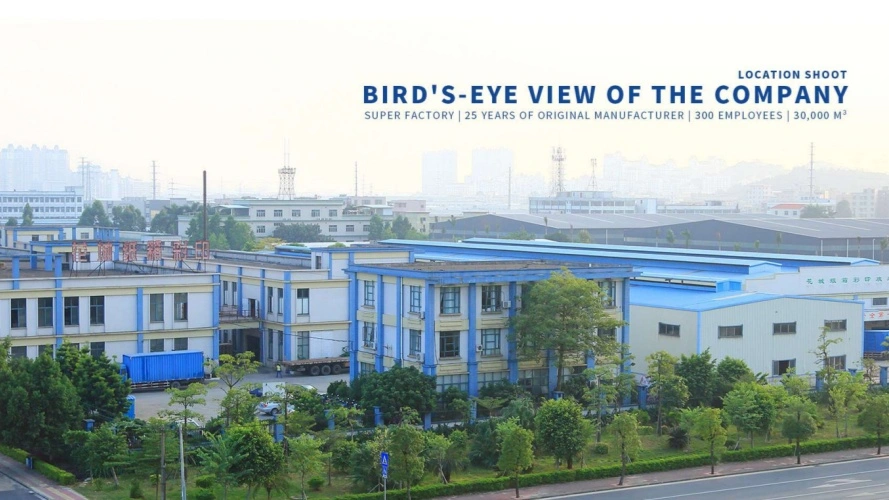
Partner with a China kraft paper bag manufacturer delivering two decades of packaging innovation across European retail markets. As a leading China kraft paper bag supplier, GUANGZHOU FETCHING COLOR PRINTING & PACKAGING LTD. operates 35,000 square meters of advanced manufacturing equipped with KBA106-(9+1) UV printing, Heidelberg XL162-6L offset systems, and AI-controlled gift box production lines serving over 1,000 loyal customers globally. Our China kraft paper bag factory maintains ISO9001-2015, ISO14001-2015, FSC, and G7 Color Management certifications ensuring every kraft paper bag for sale meets European quality and environmental standards. With 300+ skilled employees including ten senior packaging engineers, we deliver High Quality kraft paper bag solutions featuring custom handle options, specialty finishes, and competitive kraft paper bag price structures. Whether you require brown kraft retail bags, premium SBS constructions, or cost-effective CCNB alternatives, our China kraft paper bag wholesale capabilities scale from prototype through million-unit production runs. Contact our team at public@fetchingprinting.com to discuss your sustainable packaging requirements and discover why leading European retailers trust our kraft paper bag manufacturing expertise. Your success is our success.
References
1. European Commission Directorate-General for Environment. "Single-Use Plastics Directive: Implementation Guidelines for Member States." Brussels: European Union Publications Office, 2021.
2. Sustainable Packaging Coalition. "Material Selection and Environmental Impact Assessment for Retail Packaging in Western Europe." Charlottesville: GreenBlue Institute, 2023.
3. Forest Stewardship Council International. "FSC Certification Standards for Paper and Packaging Products: European Market Requirements." Bonn: FSC International Center, 2022.
4. Institute of Packaging Professionals. "Consumer Perceptions of Sustainable Packaging Materials: A Multi-Country European Study." Herndon: IOPP Research Foundation, 2024.
5. Technical Association of the Pulp and Paper Industry. "Kraft Paper Manufacturing Processes and Quality Standards for Retail Packaging Applications." Atlanta: TAPPI Press, 2023.

Based on your location and order quantity, you will have the opportunity to receive a limited time free shipping promotion!
Corporate Purpose