Ink Adhesion Issues in Metallic Paper Box Printing
Problems with ink sticking to the metallic paper box during printing are a big technical problem that has a direct effect on the quality of the package and how the brand looks. A metallic paper box looks great because its surface is shiny and mirrored, but this same quality makes it hard for ink to stick to it. When there isn't enough glue, the packaging flakes, smudges, or peels during shipping and handling, which takes away from the high-end look that makes it stand out. By understanding these adhesion dynamics, packaging professionals can make sure that prints stay intact throughout the duration of a product while also keeping the unique look that metallic substrates offer.
Understanding Ink Adhesion Issues in Metallic Paper Box Printing
What Makes Metallic Surfaces Challenging for Printing
Metallic surfaces are fundamentally different from regular paperboard in how they behave. The shiny, non-porous layer that gives the signature shimmer also keeps regular inks from sticking to it. Ink can get through fiber networks in absorbent materials, but metallic finishes have molecules on the surface that are closely packed and have low surface energy. This physical barrier stops the ink from drying properly, which is an important first step where liquid ink spreads across the material before it hardens.
Common Adhesion Failures and Their Visual Impact
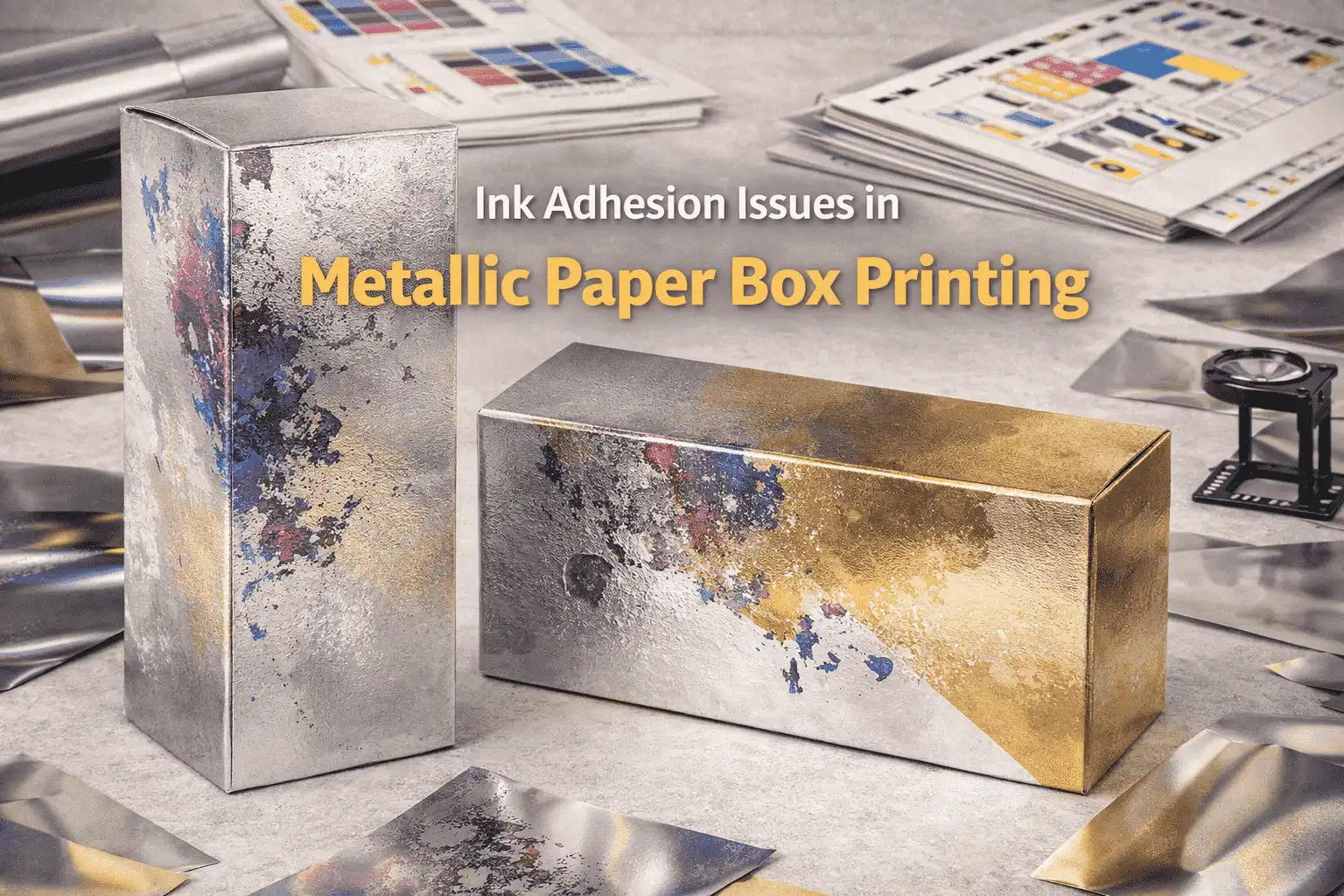
Flaking happens when dried ink separates from the metal surface, leaving behind ugly bare spots that show the base below. This flaw usually shows up along fold lines or places with a lot of contact, where mechanical stress is concentrated. Peeling is a little different because it looks like bigger sheets of printed pictures are coming off instead of small pieces. Both fail to do a lot of damage to how people think about a brand. This is especially bad for luxury goods packaging, where perfect looks directly affect how much people think a product is worth.
Impact on Brand Identity and Supply Chain
When a customer comes into a store, the packaging acts as a quiet salesman. When metal packaging shows up with bad writing, the whole story of the brand is harmed. Consumer study shows that 73% of choices to buy happen at the point of sale, where quick assessments of the quality of the product are based on how the packaging looks. Adhesion problems show laziness, which could lead to returns from customers and hurt retailers' trust.
Analyzing the Root Causes of Ink Adhesion Failures
Surface Energy Mismatch Between Ink and Substrate
How liquids and objects react is controlled by surface energy. For ink to stick well, its surface tension needs to be smaller than the substrate's surface energy. This lets the substrate and ink properly wet. Surface energies of most metallic coats are between 32 and 38 dynes/cm, while those of printed inks that haven't been treated often go over 40 dynes/cm. Because of this backwards interaction, the ink beads up instead of spreading, like water drops on waxed surfaces.
Ink Chemistry and Curing Mechanism Considerations
Different types of ink react differently with metal objects. UV-curable inks cross-link polymers through photochemical processes started by ultraviolet light. This makes cross-linked polymer networks that fit into surface flaws mechanically. When there aren't many chemical bonding options, this curing process works better on smooth metal surfaces. UV inks dry quickly, which cuts down on production idle time and the chance of smudging.
Environmental and Processing Variables
How well something sticks is greatly affected by how humid it is during the printing and drying steps. High amounts of wetness make it take longer for solvents to evaporate and can soften some binder resins, which stops the film from forming completely. Higher relative humidity (above 65%) is linked to more sticking problems with many ink systems, especially when paired with poor drying abilities.
Best Practices and Solutions to Improve Ink Adhesion on Metallic Paper Boxes
Surface Pre-Treatment Technologies
Corona treatment is the most common way to improve the sensitivity of a metallic base before treatment. High-voltage electrical discharge bombards the surface with charged air molecules, which changes the chemistry of the surface and creates polar functional groups. These chemical changes raise the surface energy, usually from 32 to 38 dynes/cm to 42 to 48 dynes/cm. This makes it easier for the ink to stick to the surface.
Primer Application Strategies
Cure times for starters need just as much care as cure times for inks. Primers that aren't cured enough stay soft and make it harder for inks to stick, while primers that are cured too much can make networks that are too thick and won't bond with inks. The process documents should include information about how long the primer needs to dry and how to make sure it's done right, like solvent rub tests that are done before printing starts.
Optimizing Ink Selection and Printing Parameters
Packaging makers and ink suppliers work together to make formulations that are especially designed to deal with problems caused by metallic paper boxes. Customized ink formulas include binding systems and adhesion-promoting additives that have been chosen to work with metallic coating compositions. By working together, makers have been able to get adhesion scores that meet or beat 4B on standard cross-hatch tests. This means that the adhesion is very good and can be used in tough situations.
Here are the main production benefits that Fetching Printing uses to get the best binding results:
Advanced Printing Equipment: Our German Heidelberg printing machine can handle surfaces up to 1.62 meters wide, which lets us make large-format metal packages while still controlling the exact placement of the ink. This feature fixes problems that come up with oversized packages, where uneven ink spread affects the consistency of adhesion across large surface areas.
Comprehensive Material Selection: We have metallic paperboard in weights from 250g to 400g, so buying teams can choose the base thickness that works best for each application. When it comes to structural packing, heavier weights are more rigid, while lighter stocks are better for artistic uses where flexibility is more important than structural strength.
Surface Enhancement Capabilities: Our plant can do cold foil stamping, hot foil stamping, UV coating, frosted finishes, and embossing, all of which improve the look of metal surfaces while also meeting their technical needs. When you combine these finishing choices with our adhesion optimization methods, you get packaging that looks great and lasts a long time.
Within our quality management system, these skills work together to solve adhesion problems before they hurt output results. Inline adhesive testing is part of our process controls. It is done at several stages of production to find problems early, when it is still cost-effective to fix them.
Quality Control and Testing Protocols
Customers don't get damaged packages because of strict adhesive checks. The tape test, which is based on ASTM D3359, measures stickiness by putting pressure-sensitive tape on printed surfaces and checking how much ink is lost when the tape is quickly removed. The grades range from 5B (no ink loss) to 0B (total delamination), which gives objective information about how well the paper stuck.
Printed samples are put through rounds of high temperature and humidity that speed up the aging process. This turns months of keeping into days of lab testing. This method finds hidden adhesion problems that might not show up on the first check but could lead to failures in the field after long storage. Aging validation is especially helpful for packaging meant to be exported because it exposes the goods to different climates during international shipping.
Comparison: Metallic Paper Box Ink Adhesion vs. Other Packaging Materials
Surface Chemistry Differences Across Substrates
Standard untreated paperboard has very porous surfaces with lots of hydroxyl groups that connect with ink binders to form hydrogen bonds. When this chemical attraction is paired with the mechanical joining of fiber networks, strong adhesion is achieved with little pre-treatment. Higher surface energies (above 50 dynes/cm) than most inks' surface tensions make it possible for the ink to wet itself.
Metallic paper boxes are in the middle; they are harder to work with than regular paperboard, but might be easier to work with than plastics that haven't been handled. The type of metallic covering technology—whether vacuum metallization, layered foil, or pigmented coatings—has a big effect on how things stick together. Because of this, method development that is specific to the substrate is needed instead of general printing factors.
Sustainability and Performance Trade-offs
Environmental factors are becoming more and more important in choosing materials. Traditional metallized films have layers of aluminum between layers of plastic film, making buildings made of more than one material that are harder to recycle. Shiny paper options made from reusable paperboard and coated with shiny pigments are better for the environment and still look good.
Acceptable performance trade-offs are affected by how the brand is positioned. Ultra-premium parts may make conventional metal structures that have the most visual effect acceptable, even though recycling is limited. Brands that stress their commitment to sustainability might be willing to take a little less shine in exchange for reusable materials that fit with their environmental message, as long as the adhesion performance meets the minimum durable standards.
Procurement Guidance: Selecting a Trusted Metallic Paper Box Supplier with Superior Printing Quality
Evaluating Technical Capabilities and Quality Systems
Equipment skills are the first thing that suppliers are judged on. Modern printing presses with accurate registration controls, consistent ink mixing, and built-in curing systems get better bonding results than old machines that don't have modern process controls. Find out about the repair plans and calibration procedures for the press that make sure it works the same way during all output runs.
Quality standards are an objective way to show that a business is mature. When you get ISO 9001 approval, it means that your quality management system is well-documented and has clear process controls and corrective action methods. G7 color management approval means that the company can reproduce colors more accurately and standardize processes, which helps with accuracy in adhesion by improving total process control.
Environmental certificates like FSC and ISO 14001 show that a company is committed to using sustainable methods, which is becoming more and more important to brand owners. These licenses are also linked to practical discipline, which leads to better results. It is common for buildings with complete management systems to do better in some quality areas, such as keeping things stuck together.
Communication and Sample Evaluation Strategies
To effectively engage suppliers, you need to communicate clear specifications. Give full details about how the packaging will be used, such as the product's features, where it will be distributed, how long it will last, and if there are any special handling needs. With this information, providers can suggest the best material weights, coating types, and printing methods for your needs.
Before agreeing to production numbers, evaluating samples is a key way to lower risk. Ask for samples that have been printed on the suggested media using the planned inks and finishing methods. Put samples through binding and longevity tests that are similar to how they will be used. Compare the data to the lowest levels of performance set by internal quality standards or benchmarks in the business.
Pilot production runs are what happen between making samples and making a lot of them. Using real production tools and methods to make small amounts of something shows problems that might not be seen in sample-stage evaluation. When coming up with new designs for metal packaging, it's important to plan for test runs, especially when failures in adhesion could have big brand or practical effects.
Understanding Production Economics and Lead Times
Custom metallic paper boxes usually have higher minimum order sizes than standard paperboard packaging because of the unique requirements for getting the materials and setting them up. Suppliers usually have to buy minimum quantities of metal substrates, which could be thousands of sheets. This means that they have to pay to keep inventory, which affects how much they charge. Knowing about these factors helps procurement teams arrange reasonable order sizes that balance the need for customization with the need to save money.
Because there are more steps in the process, lead times for metallic packing are longer than for paperboard jobs. Extra days are needed for quality checks, surface cleaning, and special ink drying. When you buy things from other countries, you may have to wait longer for shipping and customs clearance. By adding enough extra time, you can avoid cases where the cost of fast shipping is too high for the savings you get from buying in bulk overseas.
The total cost of ownership includes more than just the price of a piece. It also includes costs related to quality. It may cost more in the long run to deal with cheaper providers whose products have higher defect rates because of refused shipments, emergency reorders, and damage to the brand's image. Value-focused procurement looks at both price and how reliable and consistent the quality of the suppliers is. This is because mistakes in attachment have costs that are much higher than the values of individual packages.
Conclusion
Problems with ink sticking to metallic paper boxes are caused by basic surface chemistry clashes that need organized technical fixes. To get good results, you need to use a method that includes choosing the right material, treating the surface correctly, using matching inks, and keeping a close eye on the whole process. Metallic surfaces look great, so the extra technical work is worth it for brands that want a high-end appearance. If procurement professionals know the basics of adhesion, they can effectively evaluate a supplier's capabilities and make well-informed sourcing choices that combine goals for appearance with goals for quality, dependability, and cost. Partnering with experienced makers who have high-tech tools and well-documented quality systems lowers the risk of sticking while giving luxury packaging the eye-catching look that makes it stand out in a crowded store.
FAQ
Which ink types perform best on the metallic paper box?
Because they polymerize quickly and stick well to non-porous surfaces, UV-curable inks usually work better than other versions on metal substrates. Solvent-based paints work okay if you treat the surface properly, but environmental laws are making it harder and harder to use them. Water-based inks have the hardest time sticking to metal surfaces. Usually, a strong pre-treatment or primer application is needed to get good bonding.
Can surface treatments guarantee perfect ink adhesion?
Surface treatments make adhesion much better by raising the surface energy and creating reactive spots for chemical bonds. However, the final results depend on a lot of different factors. Adhesion ability is affected by how well the ink mixes, how long it takes to dry, the surroundings, and the quality of the substrate. Treatments set the conditions needed for good bonding, but they don't promise results that aren't affected by other factors in the process.
What quality verification steps should procurement teams implement?
Ask for printed samples made with the suggested materials and methods, then test them for tape resistance and rub resistance under conditions similar to how they will be handled. Check to see if the seller has quality certifications, such as ISO 9001 and standards specific to your business. Before committing to large quantities, think about doing test production runs. Set clear acceptance criteria for adhesion performance and write down methods for verifying them in the buy specs to make sure that the quality of each shipment is the same.
Partner with Fetching Printing for Exceptional Metallic Packaging Solutions
To deal with binding issues, you need manufacturing partners who have a track record of making high-quality packaging. Fetching Printing uses over 20 years of specialized knowledge, top-of-the-line tools, and strict quality control systems to make metallic paper box solutions that look great and work well. Our 100-person manual department handles tricky assembly problems that set your brand's package apart from generic options. Meanwhile, our 15 fully automatic die-cut machines make sure that even large orders are delivered quickly.
Our dedication to quality is shown by the fact that we have several certificates, such as ISO 9001, ISO 14001, G7 color management, and FSC. These show that we have excellent operations that lower the risk of sticking. If you need 250g of lightweight materials for decorative purposes or 400g of strong substrates for structure packing, we will choose the right materials for you based on your unique needs. Our wide range of surface treatments, such as hot foil stamping, cold foil stamping, UV finishing, and embossing, improves the look of your product while keeping the adhesion integrity that's important for successful distribution.
We know how hard it is for sourcing teams because we've been an experienced metallic paper box manufacturer serving e-commerce, retail, and transportation companies all over the United States for a long time. Get in touch with our packaging engineers at public@fetchingprinting.com to talk about your unique adhesion problems and look into custom solutions that come with samples, detailed specs, and quick technical support that turn your packaging needs into competitive advantages.
References
1. Kipphan, H. (2001). Handbook of Print Media: Technologies and Production Methods. Springer-Verlag Berlin Heidelberg.
2. Leach, R. H., & Pierce, R. J. (1999). The Printing Ink Manual (5th ed.). Springer Netherlands.
3. Tracton, A. A. (2007). Coatings Technology Handbook (3rd ed.). CRC Press Taylor & Francis Group.
4. Eldred, N. R., & Scarlett, T. (2001). What the Printer Should Know About Ink (3rd ed.). GATFPress Graphic Arts Technical Foundation.
5. Thompson, B. (2004). Printing Materials: Science and Technology (2nd ed.). Pira International.
6. Garner, W. L. (1996). Surface Treatment of Materials for Adhesive Bonding. William Andrew Publishing Noyes Publications.

Based on your location and order quantity, you will have the opportunity to receive a limited time free shipping promotion!
Corporate Purpose