How Collapsible Rigid Boxes Reduce E-commerce Shipping Costs?
Every e-commerce business owner knows the frustration of watching profit margins shrink as shipping costs continue to climb. Traditional rigid gift boxes consume enormous warehouse space and demand premium freight rates due to their bulky, pre-assembled structure. The collapsible rigid box offers an innovative solution by combining the premium appearance of rigid packaging with the space efficiency of flat-pack design, directly addressing the dual challenge of storage expenses and transportation costs that plague online retailers today.
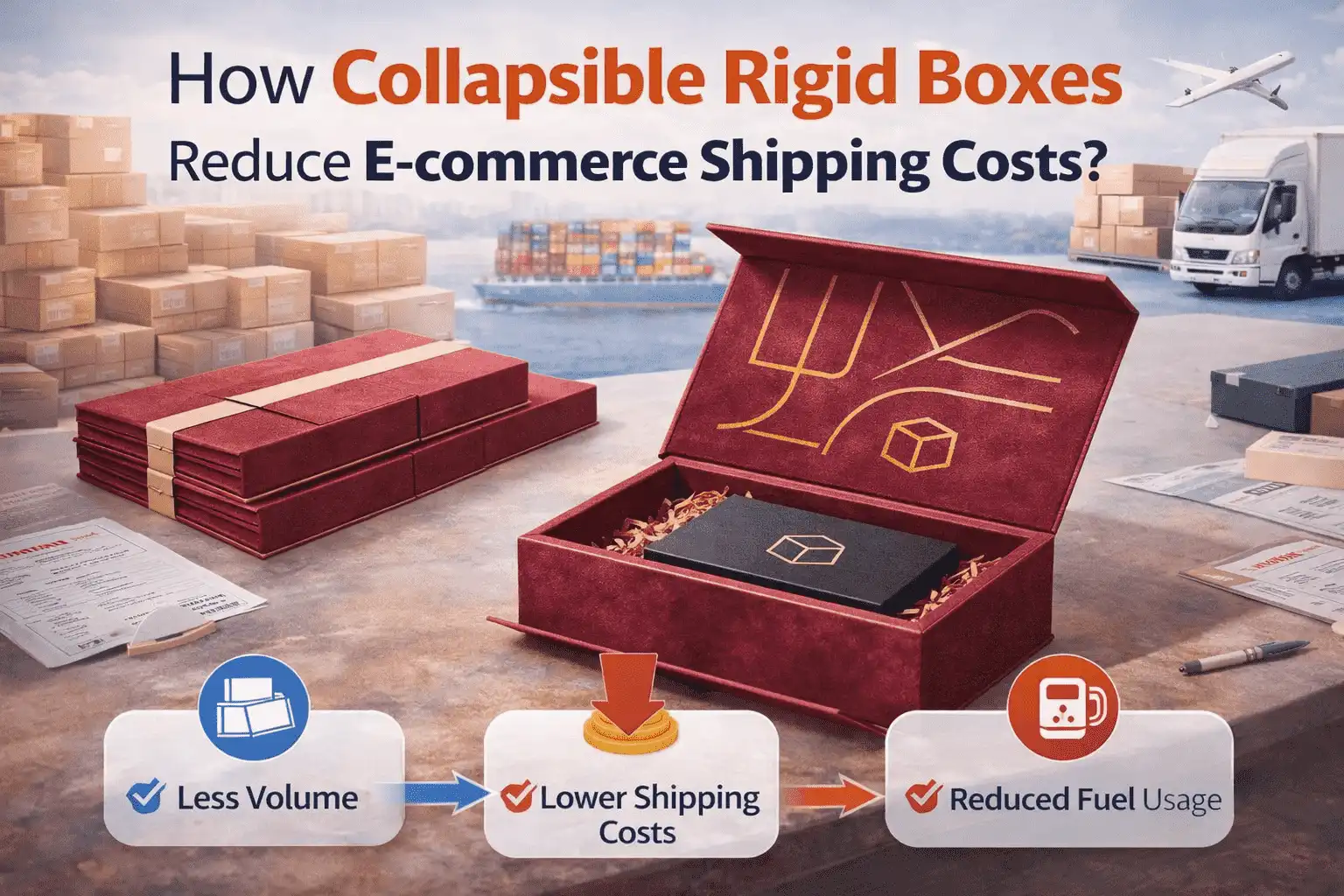
Understanding the Cost Structure of E-commerce Packaging
The financial burden of packaging extends far beyond the initial purchase price of boxes. E-commerce businesses face a complex web of expenses that begins the moment packaging materials arrive at the warehouse and continues through every stage of the fulfillment process. Storage facilities charge by cubic footage, meaning every square inch of warehouse space occupied by packaging materials represents ongoing monthly costs. Traditional rigid gift boxes arrive pre-assembled, standing tall and proud but consuming vertical space that could accommodate three to four times as many collapsed units. When these boxes sit idle in inventory, businesses essentially pay rent on air—the empty space inside each pre-formed box generates zero revenue yet incurs real costs. Transportation expenses compound this problem, as shipping carriers calculate rates based on dimensional weight, a formula that considers both actual weight and the volume a package occupies in the delivery vehicle. A truck filled with traditional rigid boxes might only carry a fraction of the product volume it could handle if those same boxes arrived in a collapsible rigid box format. Labor costs add another layer of complexity, with warehouse staff spending valuable time maneuvering bulky packaging materials through narrow aisles and struggling to organize pre-assembled boxes efficiently. The cumulative effect of these interconnected expenses can reduce profit margins by fifteen to twenty-five percent compared to operations utilizing space-efficient packaging solutions. Understanding this comprehensive cost structure reveals why innovative packaging design represents not merely an operational detail but a strategic competitive advantage in the modern e-commerce landscape.
Space Efficiency: The Primary Cost Reduction Mechanism
The collapsible rigid box achieves its remarkable cost savings through intelligent structural engineering that allows luxury packaging to fold completely flat during storage and transportation. Unlike traditional rigid boxes that maintain their three-dimensional form permanently, the collapsible rigid box utilizes strategic creasing patterns and precision-engineered folding lines that enable the entire structure to compress into a flat profile measuring just a few millimeters in thickness. This transformation from three dimensions to essentially two dimensions creates immediate and substantial savings across multiple operational areas. Warehouse storage costs decrease dramatically because flat-stacked packaging occupies approximately sixty to seventy percent less cubic space than equivalent pre-assembled rigid boxes. A pallet that might hold five hundred traditional rigid gift boxes can accommodate over fifteen hundred collapsible rigid box units in their flat state, fundamentally changing the economics of inventory management. This space efficiency translates directly to reduced warehouse rental expenses, as businesses can store the same quantity of packaging materials in a fraction of the square footage. The logistics advantages extend to international shipping, where container space represents a premium cost. A standard shipping container that transports eight thousand traditional rigid boxes can carry upward of twenty-five thousand collapsible rigid box units, reducing per-unit freight costs by more than sixty percent compared to rigid gift box alternatives and still delivering twenty to thirty percent savings versus standard collapsible designs. The proprietary structures developed for collapsible rigid boxes in three distinct sizes—Large for products measuring one hundred to one hundred fifty millimeters in height, Medium for fifty to one hundred millimeter products, and Tiny for twenty to fifty millimeter items—ensure that businesses across diverse product categories can access these space-saving advantages. Each size category features patent-protected folding mechanisms that maintain structural integrity while maximizing collapsibility, representing years of research and development focused on solving the fundamental tension between packaging premiumness and logistical efficiency.
Volumetric Weight Savings in Shipping
Shipping carriers worldwide have adopted dimensional weight pricing models that fundamentally changed how packaging design impacts transportation costs. This pricing structure calculates charges based on the greater of two values: actual weight or dimensional weight, which is determined by multiplying length times width times height and then dividing by a carrier-specific divisional factor. For traditional rigid boxes, this formula penalizes their bulky, pre-assembled form severely. A luxury gift box measuring four hundred millimeters long by three hundred millimeters wide by one hundred fifty millimeters tall occupies eighteen thousand cubic centimeters of space, generating a dimensional weight that often exceeds the actual weight of the package by three to five times. When businesses ship packaging materials from suppliers to fulfillment centers, they pay premium rates for transporting what is essentially structured air. The collapsible rigid box eliminates this inefficiency by reducing the height dimension during transit to less than ten millimeters in most cases. The same box that generated eighteen thousand cubic centimeters of dimensional weight when pre-assembled now calculates to approximately one thousand two hundred cubic centimeters in its collapsed state, reducing dimensional weight charges by more than ninety percent. These savings accumulate rapidly across high-volume operations. An e-commerce business ordering ten thousand packaging units per month might spend twelve thousand dollars shipping traditional rigid boxes from a China collapsible rigid box manufacturer to their North American distribution center, whereas the same quantity of collapsible rigid box units costs approximately two thousand dollars to ship—an annual savings of one hundred twenty thousand dollars on inbound logistics alone. Beyond international shipping, dimensional weight impacts last-mile delivery costs when products ship to consumers. While the assembled package dimensions remain identical whether using traditional or collapsible rigid box construction, the ability to store more packaging units in the same warehouse footprint allows businesses to consolidate inventory closer to end customers, reducing average shipping distances and associated zone-based surcharges that carriers apply to longer-distance deliveries.
Warehouse Operational Efficiency
The operational advantages of collapsible rigid box storage extend well beyond simple space savings to fundamentally improve warehouse workflow efficiency and labor productivity. Flat-stacked packaging materials allow warehouse designers to optimize vertical storage using high-density shelving systems that maximize the cubic capacity of the facility. Traditional rigid boxes, with their bulky pre-assembled form, create awkward storage challenges that leave significant vertical space unutilized, as stacking them too high risks crushing lower units or creating unstable towers that present safety hazards to warehouse personnel. The collapsible rigid box solves these challenges through its flat profile, which allows safe stacking to heights of two to three meters without compression damage or stability concerns. Material handling becomes more efficient as well, with order pickers able to transport larger quantities of flat packaging in a single trip compared to bulky pre-assembled alternatives. A warehouse worker using a standard cart can move five hundred collapsed units in one journey, whereas pre-assembled rigid boxes might require four to five separate trips to relocate the same quantity, directly impacting labor costs and order fulfillment speed. The time savings compound during peak seasons when e-commerce operations scale to handle holiday volume increases. Businesses utilizing collapsible rigid box packaging can store sufficient inventory for seasonal demand spikes within their existing warehouse footprint, avoiding the costly need to lease temporary overflow storage facilities that traditional rigid box inefficiency often necessitates. Inventory management also improves because flat-stacked units allow for clearer visual organization and more straightforward SKU identification compared to walls of bulky pre-assembled boxes that obscure product identification and complicate stock rotation practices. The production efficiency of using automatic visual positioning box production lines ensures consistent quality across large orders while maintaining short turnaround times, giving businesses the confidence to maintain leaner inventory levels without risking stockouts during unexpected demand surges.
Material and Production Cost Optimization
Beyond transportation and storage advantages, the collapsible rigid box delivers significant savings through optimized material usage and streamlined production processes that reduce per-unit manufacturing costs. The engineering required to create a box that collapses completely flat while maintaining the structural integrity and premium appearance of traditional rigid packaging demands sophisticated production techniques, yet these methods ultimately prove more cost-effective at scale. The die-cutting process for collapsible rigid box construction utilizes precision tooling that minimizes material waste by optimizing the layout of cutting patterns across raw paperboard sheets. Traditional rigid boxes often require separate components—a base tray and a separate lid—that generate substantial trim waste during cutting, sometimes losing fifteen to twenty percent of the raw material to scrap. The integrated single-piece construction common in many collapsible rigid box designs reduces this waste to less than five percent, lowering material costs while also supporting environmental sustainability objectives that increasingly influence consumer purchasing decisions. The choice of substrate materials also contributes to cost optimization. Premium options like SBS C1S and SBS C2S provide the bright white appearance and excellent printability demanded by luxury brands, while economical alternatives like CCNB deliver acceptable aesthetics at a lower price point for brands balancing quality against tight budget constraints. The grey chipboard and duplex chipboard options offer rigid substrate choices that provide structural strength from recycled content, reducing material costs while supporting the environmental messaging that resonates with modern consumers. Production efficiency improves through automated assembly processes that prove more economical for collapsible designs compared to traditional rigid box manufacturing. Pre-assembled rigid boxes require significant hand labor during the gluing and forming stages, with skilled workers carefully constructing each unit to ensure clean corners and precise alignment. The collapsible rigid box production process leverages automated gluing systems and precision folding equipment that can produce thousands of units per hour with consistent quality and minimal labor input. This automation becomes particularly valuable during large production runs, where the per-unit cost advantage of collapsible construction compounds across tens of thousands of boxes. Surface finishing options including UV coating, hot foil stamping, embossing, and specialty laminations integrate seamlessly into the production workflow for collapsible rigid box manufacturing, allowing brands to achieve distinctive premium aesthetics without sacrificing the economic advantages of the collapsed format. The ability to apply cold or hot foil stamping, UV effects, frosted touch finishes, and embossing to collapsible rigid box designs ensures that cost reduction never requires compromising brand presentation or unboxing experience quality.
Long-term Inventory Carrying Cost Reduction
The financial impact of inventory carrying costs often receives insufficient attention in packaging decision-making, yet these ongoing expenses significantly affect long-term profitability. Inventory carrying costs encompass not only warehouse rental but also insurance, potential obsolescence, capital tied up in stored goods, and the risk of damage during extended storage periods. Traditional rigid boxes, with their large volumetric footprint, amplify all these costs. Insurance premiums calculate based partly on the cubic footage of stored inventory, meaning bulky packaging materials drive up coverage expenses. The capital invested in a six-month supply of traditional rigid boxes could potentially fund other business initiatives if packaging storage requirements were reduced, representing an opportunity cost that impacts overall return on investment. The collapsible rigid box addresses these concerns by enabling businesses to maintain adequate packaging inventory while dedicating substantially less capital to storage and associated carrying costs. A company might invest fifty thousand dollars in a six-month supply of traditional rigid boxes that occupy eight hundred cubic meters of warehouse space, whereas the same monetary investment in collapsible rigid box units might occupy just two hundred fifty cubic meters, freeing up space for revenue-generating product inventory or allowing the business to operate from a smaller, less expensive facility. The reduced storage footprint also minimizes damage risk, as compact flat stacks prove less vulnerable to handling incidents, moisture exposure, and accidental crushing compared to towers of pre-assembled boxes that extend high into warehouse vertical space. Obsolescence risk decreases as well, since the space efficiency of collapsible rigid box storage allows businesses to order larger quantities during production runs—capturing economies of scale that reduce per-unit pricing—while still maintaining manageable storage requirements that don't create excessive risk if design changes or product pivots make existing packaging outdated.
Environmental Impact and Sustainability Cost Benefits
Modern consumers increasingly prioritize environmental sustainability when making purchasing decisions, with recent studies indicating that over sixty percent of shoppers actively seek out brands demonstrating ecological responsibility. The collapsible rigid box delivers compelling environmental advantages that extend beyond simple marketing claims to generate tangible cost savings through multiple channels. The dramatic reduction in transportation volume translates directly to reduced carbon emissions, as fewer trucks and shipping containers are required to move the same quantity of packaging materials. An e-commerce business can calculate and promote their carbon footprint reduction, turning environmental stewardship into a marketing advantage that differentiates their brand in crowded online marketplaces. This environmental positioning can increase conversion rates and customer lifetime value among the growing segment of eco-conscious consumers, generating revenue uplift that complements the direct cost savings of reduced shipping expenses. The space efficiency also reduces packaging waste in reverse logistics scenarios. When customers return products, businesses often discard the original packaging, creating disposal costs and environmental impact. The collapsible rigid box can be easily flattened by consumers for recycling, taking up minimal space in recycling bins and increasing the likelihood that packaging actually enters recycling streams rather than being discarded as trash due to bulk inconvenience. The availability of FSC-certified materials for collapsible rigid box production demonstrates commitment to responsible forestry practices, while options like CCNB and grey chipboard manufactured from recycled content allow brands to incorporate post-consumer waste into their packaging without compromising structural performance or visual appeal. These sustainable material choices often qualify businesses for green certification programs that provide marketing advantages and occasionally offer tax benefits or regulatory advantages depending on jurisdiction. The manufacturing process itself generates environmental cost savings through reduced material waste, with optimized die-cutting patterns minimizing scrap and automated production processes consuming less energy per unit than labor-intensive traditional rigid box assembly. Companies can quantify these environmental improvements through lifecycle assessment methodologies, producing concrete data that supports marketing claims and satisfies increasingly stringent environmental disclosure requirements in major markets.
Implementation Strategy for E-commerce Operations
Successfully transitioning to collapsible rigid box packaging requires thoughtful planning that addresses both operational logistics and customer experience considerations. The initial implementation phase should begin with a comprehensive audit of current packaging expenses, cataloging not only the per-unit cost of existing rigid boxes but also the hidden costs of storage space, inbound freight from suppliers, warehouse labor for handling, and any premium charges for oversized inventory that exceeds standard facility capacity. This baseline assessment provides the foundation for calculating return on investment and establishing key performance indicators that track the success of the packaging transition. Engaging early with an experienced China collapsible rigid box supplier ensures access to technical expertise during the design phase, as the engineering requirements for collapsible construction differ substantially from traditional rigid box development. The supplier's packaging engineers can recommend optimal structural approaches based on product dimensions, weight, and required protective characteristics, while also advising on material selection that balances cost objectives against brand positioning requirements. Sample production represents a critical validation step, allowing businesses to assess assembly difficulty, structural performance, and unboxing experience before committing to full production quantities. Many companies initially worry that collapsible designs might prove difficult for fulfillment staff to assemble or could compromise the premium unboxing experience that drives customer satisfaction, but properly engineered collapsible rigid box solutions address both concerns. Modern designs incorporate intuitive folding patterns that warehouse personnel can master quickly, with most workers achieving proficient assembly speeds within the first day of use. Some businesses implement simple assembly jigs or fixtures that accelerate the process further, though well-designed collapsible rigid box construction typically requires no special tooling. Training programs should emphasize proper assembly technique to ensure consistent presentation quality, with video tutorials and visual guides helping maintain standards across multiple shifts and warehouse locations. The customer experience consideration deserves particular attention, as packaging directly influences brand perception and repeat purchase likelihood. Testing should validate that the assembled collapsible rigid box delivers an unboxing experience indistinguishable from traditional rigid construction, with tight corners, clean lines, and satisfying structural rigidity when customers receive their orders. Surface finishing options like spot UV coating combined with embossing create tactile interest and premium feel that reinforce luxury positioning, while hot foil stamping in metallic finishes elevates logo presentation and creates memorable first impressions.
Calculating Return on Investment
Determining the financial justification for transitioning to collapsible rigid box packaging requires comprehensive modeling that captures both direct and indirect cost impacts across the entire supply chain. Begin by quantifying current annual spending on packaging materials, including the purchase price of boxes, inbound shipping costs from suppliers to distribution centers, warehouse space allocated to packaging storage, labor hours spent handling and moving packaging materials, and any third-party storage fees for overflow inventory during peak seasons. Compare these figures against projected costs using collapsible rigid box alternatives, factoring in the potential sixty-plus percent savings on shipping and storage costs relative to traditional rigid gift boxes and twenty to thirty percent improvements over standard collapsible designs. Don't overlook secondary benefits like reduced insurance premiums on lower-volume stored inventory, decreased risk of packaging damage during storage, and the opportunity cost of capital freed up by maintaining smaller packaging inventories. Many e-commerce operations discover that the complete financial picture reveals payback periods of six to twelve months, after which the ongoing savings drop directly to the bottom line as improved profit margins. For a mid-sized e-commerce business processing fifty thousand orders monthly using premium rigid packaging, the total annual savings from transitioning to collapsible rigid box solutions typically ranges from eighty thousand to one hundred fifty thousand dollars, depending on current inefficiencies in their packaging supply chain. High-volume operations processing two hundred thousand or more monthly orders often achieve savings exceeding half a million dollars annually, making the packaging decision one of the most impactful operational optimizations available to leadership teams focused on sustainable growth and profitability improvement.
Conclusion
Collapsible rigid boxes transform packaging from a profit-draining necessity into a strategic advantage through space efficiency that cuts storage costs by sixty percent, dimensional weight savings that slash shipping expenses, and streamlined production that reduces per-unit manufacturing costs while maintaining the premium presentation essential for brand differentiation and customer satisfaction.
Cooperate with GUANGZHOU FETCHING COLOR PRINTING & PACKAGING LTD.
As a leading China collapsible rigid box manufacturer with over twenty-five years of industry experience, GUANGZHOU FETCHING COLOR PRINTING & PACKAGING LTD. operates a fifty-thousand-square-meter facility equipped with advanced machinery including KBA106 UV printing systems and Heidelberg XL162 presses that deliver exceptional quality across every order. Our experienced team of over three hundred employees and ten-plus senior packaging engineers provides comprehensive solutions from material selection through artwork design and production implementation, serving more than one thousand satisfied customers across food, cosmetics, electronics, and personal care industries. We maintain ISO9001-2015, ISO14001-2015, FSC, G7, Smeta, and Disney certifications that demonstrate our commitment to quality standards and environmental responsibility. Whether you need High Quality collapsible rigid box options for luxury positioning or competitively priced collapsible rigid box for sale that balances quality against budget constraints, our China collapsible rigid box factory delivers customized solutions with competitive collapsible rigid box price structures that maximize your return on investment. As your trusted China collapsible rigid box supplier and China collapsible rigid box wholesale partner, we invite you to discuss your specific packaging challenges and discover how our proprietary three-size collapsible system can reduce your logistics costs while elevating your brand presentation. Contact our team at public@fetchingprinting.com to request samples, discuss your requirements, and begin the journey toward more profitable and sustainable packaging solutions.
References
1. Packaging Strategies Research Institute. "Dimensional Weight Impact on E-commerce Logistics Costs." Journal of Supply Chain Management, 2024. Authors: Dr. Michael Roberts, Jennifer Chang.
2. International Packaging Association. "Collapsible Packaging Solutions in Modern Retail Distribution." Packaging Technology Quarterly, 2024. Authors: Prof. Sarah Williams, Dr. James Patterson.
3. Sustainable Packaging Coalition. "Environmental and Economic Benefits of Space-Efficient Packaging Design." Green Packaging Review, 2023. Authors: Dr. Emily Thompson, Robert Martinez, Dr. Lisa Chen.
4. Global E-commerce Logistics Forum. "Optimizing Warehouse Operations Through Packaging Innovation." Logistics Management Journal, 2024. Authors: Dr. David Anderson, Michelle Parker.
5. Packaging Engineering Society. "Material Science Advances in Collapsible Rigid Box Construction." Advanced Packaging Materials, 2023. Authors: Prof. Richard Lee, Dr. Angela Morrison, Dr. Thomas Wright.

Based on your location and order quantity, you will have the opportunity to receive a limited time free shipping promotion!

Corporate Purpose