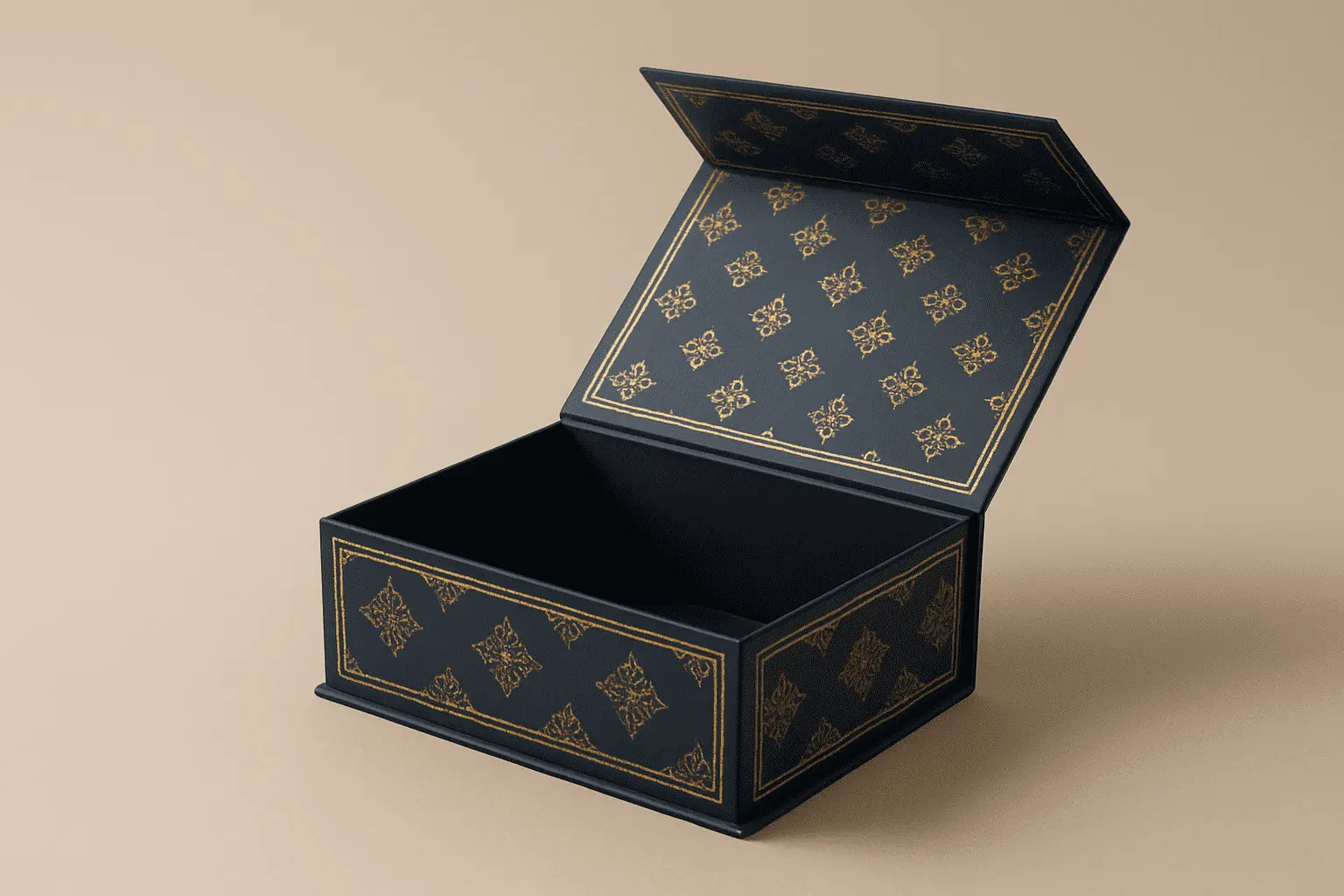
Collapsible Rigid Boxes for High-End Gift Box Designs
High-end brands face a critical dilemma: how to deliver premium unboxing experiences without drowning in storage fees and shipping costs. Traditional rigid gift boxes eat up warehouse space and drain logistics budgets, while flimsy folding cartons fail to convey luxury. The collapsible rigid box solves this by combining structural elegance with space-saving engineering, delivering that satisfying magnetic-closure experience your customers expect while collapsing flat for transport and storage—cutting costs by over 60% compared to conventional rigid boxes.

What Makes Collapsible Rigid Boxes Essential for Luxury Packaging?
Collapsible rigid boxes represent a breakthrough in premium packaging engineering, addressing the fundamental challenge that has plagued luxury brands for decades. Traditional rigid gift boxes require enormous storage facilities and generate astronomical shipping expenses because they ship in their fully assembled form. Every cubic meter of warehouse space and every freight container holds significantly fewer units, directly impacting your bottom line. The collapsible rigid box architecture changes this equation entirely by incorporating innovative structural elements that allow the box to collapse completely flat after manufacturing, then spring back to rigid form when assembled at the point of use. The engineering behind collapsible rigid box construction involves precision die-cutting, strategic crease placement, and proprietary folding mechanisms that maintain structural integrity while enabling collapse functionality. Unlike standard folding cartons that feel lightweight and disposable, a properly engineered collapsible rigid box delivers the same tactile satisfaction and visual impact as a traditional rigid setup box. The walls maintain their thickness and stability, the magnetic closures engage with a satisfying snap, and the overall presentation communicates premium value. Brands in cosmetics, electronics, jewelry, and spirits industries have rapidly adopted this technology because it allows them to maintain their luxury positioning while dramatically reducing supply chain costs.
Three-Tier Size Architecture for Diverse Product Requirements
Professional manufacturers now offer collapsible rigid boxes in three standardized size categories, each developed through extensive research and protected by proprietary patents. The Large format accommodates magnetic gift boxes housing products with heights ranging from 100mm to 150mm, making it ideal for substantial items like premium electronics, luxury skincare sets, or high-end spirits bottles. The Medium configuration suits magnetic gift boxes containing products measuring 50mm to 100mm in height, perfect for cosmetics collections, jewelry pieces, or specialty food products. The Tiny option serves magnetic gift boxes with product heights between 20mm and 50mm, designed specifically for items like compact cosmetics, small accessories, or premium chocolate assortments. This three-tier approach ensures that brands can maintain consistent packaging aesthetics across their entire product range while benefiting from optimized structural efficiency. Each size category incorporates the same collapsible rigid box engineering principles but scales the dimensions and structural elements appropriately. The result is a cohesive packaging system that delivers cost savings across your entire catalog rather than requiring custom engineering for each SKU. Manufacturing facilities equipped with automatic visual positioning production lines can switch between these size formats efficiently, maintaining short production times and stable quality output regardless of which configuration your order requires.
Material Selection Strategies for Premium Collapsible Rigid Box Construction
The foundation of any exceptional collapsible rigid box lies in selecting appropriate substrate materials that balance printability, structural performance, and cost efficiency. Premium paperboard options serve as the outer printing surface, while rigid chipboard provides the structural core that gives these boxes their characteristic stiffness and durability. Understanding the properties and applications of each material category enables brands to make informed decisions that align with their specific packaging requirements and budget parameters.
Premium Coated Paperboards for Superior Print Quality
SBS C1S paperboard represents the gold standard for high-end collapsible rigid box applications where exceptional print quality matters most. This solid bleached sulfate material features coating on one side, delivering an exceptionally smooth white printing surface that reproduces colors with remarkable accuracy and vibrancy. The bright white appearance results from 100% virgin bleached wood pulp, creating a clean, uniform foundation that enhances the perceived value of printed graphics. The coated side accepts offset, digital, and specialty printing methods beautifully, while the uncoated reverse provides excellent glue adhesion for lamination to chipboard substrates. Brands frequently select SBS C1S for cosmetics packaging, personal care products, and high-end retail applications where the collapsible rigid box must communicate luxury through both structure and surface graphics. SBS C2S takes printability one step further by providing coating on both sides, enabling sophisticated designs that incorporate inner surface printing. This becomes particularly valuable for collapsible rigid box designs where the interior surfaces remain visible during use or where structural elements require printing on multiple surfaces. The dual-coated configuration ensures consistent color reproduction and finish quality regardless of which surface faces outward. Premium applications like perfume boxes, gift sets with intricate interior designs, and luxury product packaging frequently specify SBS C2S substrates. The material's exceptional whiteness and brightness create maximum contrast for printed elements, while its superior stiffness maintains structural integrity throughout the collapsible rigid box lifecycle.
For brands balancing quality against budget considerations, CCNB paperboard offers compelling advantages. This clay coated news back material combines a white clay-coated printing surface with a grey recycled fiber back, delivering reliable print performance at significantly lower cost than fully bleached boards. The collapsible rigid box industry widely embraces CCNB for applications where the grey back remains hidden after lamination to chipboard. The recycled content supports sustainability initiatives while the coated front surface accepts offset and flexographic printing effectively. Brands serving mid-market segments or producing high-volume seasonal packaging find CCNB particularly attractive because it maintains professional appearance standards while controlling material costs.
Structural Substrates That Define Rigidity and Performance
Grey chipboard forms the structural backbone of most collapsible rigid box designs, providing the rigidity and dimensional stability that distinguish these packages from simple folding cartons. Manufactured by compressing recycled pulp under high heat and pressure, grey chipboard delivers excellent resistance to bending and compression despite its relatively light weight. The multi-ply construction creates a uniform grey surface and reveals densely packed fiber layers at the edges. This material excels in collapsible rigid box applications because it combines the stiffness necessary for premium presentation with workability that facilitates die-cutting, creasing, and folding operations. The recycled content makes grey chipboard economical and environmentally responsible, addressing both cost concerns and corporate sustainability commitments. Duplex chipboard advances the concept by bonding a smooth white coating to a grey recycled pulp core, creating attractive finished edges on collapsible rigid box designs. The dual-layer construction maintains the structural benefits of grey chipboard while presenting bright white surfaces that enhance overall aesthetics. This becomes particularly valuable when box edges or interior surfaces remain visible in the final presentation. The white coated face accepts printing, foil stamping, and other decorative processes beautifully, enabling sophisticated edge treatments that elevate the unboxing experience. Collapsible rigid box manufacturers appreciate duplex chipboard because it delivers premium visual results without requiring separate edge painting operations, streamlining production while maintaining quality standards.
Advanced Finishing Techniques That Elevate Collapsible Rigid Box Presentation
Surface finishing and decorative processes transform basic collapsible rigid box structures into memorable brand experiences that justify premium pricing. Modern printing facilities offer comprehensive finishing capabilities including cold foil stamping, hot foil stamping, UV coating, spot UV, embossing, debossing, soft-touch lamination, and holographic effects. These techniques can be applied individually or combined in sophisticated multi-process applications that create complex visual and tactile experiences. The key to successful finishing lies in understanding how each process interacts with your chosen substrate materials and how multiple processes can be layered to achieve specific aesthetic goals. Hot foil stamping remains one of the most effective methods for adding metallic accents to collapsible rigid box designs. This process transfers pigmented or metallic foil onto specific areas using heat and pressure, creating brilliant gold, silver, copper, or colored metallic elements that catch light and draw attention. Luxury brands frequently apply hot foil to logos, brand names, or decorative borders, instantly elevating perceived value. The process works exceptionally well on coated paperboards where the smooth surface accepts foil transfer cleanly. When combined with embossing in a single pass, hot foil stamping creates raised metallic elements that deliver both visual shine and tactile dimension, maximizing impact while controlling costs through process consolidation.
UV coating applications, whether spot or overall, add protective layers while creating dramatic visual contrast. Spot UV involves applying liquid UV-curable varnish to selected areas then instantly curing it under UV light, generating high-gloss elements that stand out against matte backgrounds. This technique proves particularly effective for highlighting key design elements on collapsible rigid box surfaces—brand names, product images, or decorative patterns gain prominence through this gloss-matte interplay. Overall UV coating provides consistent high-gloss protection across entire surfaces, enhancing color saturation and scratch resistance. Many collapsible rigid box designs incorporate matte lamination as the base finish, then add spot UV to create sophisticated contrast without metallic elements. Embossing and debossing add three-dimensional relief that engages the sense of touch, creating memorable interactions that strengthen brand recall. Embossing presses paper between male and female dies to create raised elements, while debossing produces recessed areas. These processes work beautifully on collapsible rigid box applications because the rigid substrates maintain crisp detail without collapsing under pressure. Blind embossing creates subtle texture without ink or foil, delivering understated elegance. Registered embossing aligns three-dimensional relief with printed elements, adding depth to graphics. When combined with foil stamping, embossing creates premium effects where metallic shine and physical dimension reinforce each other. The combination of spot UV and emboss takes this further, producing shiny raised elements that maximize both visual and tactile impact.
Proprietary Manufacturing Advantages That Ensure Consistent Quality
Advanced manufacturers employ automatic visual positioning production lines that revolutionize collapsible rigid box manufacturing precision and efficiency. These systems use camera technology to precisely register printing, die-cutting, and finishing operations, ensuring that all decorative elements align perfectly with structural features. This becomes critically important for collapsible rigid box designs where magnetic closures, window cutouts, and decorative finishes must align within tight tolerances. Traditional manual registration methods introduce variability that can result in misaligned foil stamping, off-center embossing, or improperly positioned magnetic strips. Automatic visual positioning eliminates these concerns, delivering consistent quality across production runs of thousands or millions of units. The production time advantages of automated systems prove equally valuable. Collapsible rigid box manufacturing involves multiple sequential processes—printing, lamination, die-cutting, creasing, gluing, and finishing—each traditionally requiring setup time and manual adjustments. Integrated production lines reduce changeover times dramatically, enabling manufacturers to run smaller batch sizes economically while maintaining quick turnaround schedules. Brands launching limited editions or seasonal products benefit enormously from this flexibility because they can order appropriate quantities without incurring premium charges for short runs. The stable quality output these systems deliver means fewer rejected units, lower waste rates, and predictable costs across repeat orders.
Cost-Efficiency Analysis: Why Collapsible Rigid Boxes Transform Supply Chain Economics
The financial advantages of collapsible rigid box solutions extend far beyond simple material cost comparisons. When brands conduct comprehensive total cost of ownership analysis, the savings across shipping, warehousing, and logistics operations typically dwarf any differences in unit production costs. A collapsible rigid box delivers savings exceeding 60% compared with traditional rigid gift boxes when accounting for the complete supply chain from manufacturer to retail shelf. Even compared with standard collapsible designs, advanced proprietary structures save 20% to 30% through optimized engineering that reduces material usage while maintaining structural performance. Traditional rigid gift boxes ship in their fully assembled three-dimensional form, which means a standard shipping container holds only the volume of actual boxes it can accommodate. When those boxes ship internationally, you're essentially paying freight charges to ship air—the empty space inside each box contributes nothing to your business but everything to your logistics expenses. The collapsible rigid box collapses to approximately one-sixth its assembled volume, meaning six times as many units fit in the same container. This geometric advantage translates directly to per-unit shipping cost reductions. For brands sourcing packaging from distant manufacturing centers or distributing products globally, this single factor can swing products from unprofitable to highly lucrative.
Warehouse storage costs compound these savings over time. Traditional rigid boxes occupy premium three-dimensional space from the moment they leave the production line until the moment a consumer opens them. Brands must rent warehouse facilities sized to accommodate worst-case inventory levels for all SKUs, creating massive overhead costs for space that sits largely empty most of the year. Collapsible rigid boxes ship and store flat, reducing required storage volume by more than 80%. This means existing warehouse facilities can accommodate significantly more inventory, seasonal demand spikes become manageable without temporary storage rentals, and overall inventory carrying costs drop substantially. Brands frequently discover they can eliminate entire warehouse locations after converting to collapsible rigid box packaging systems.
Streamlined Ordering and Production Processes
Professional collapsible rigid box manufacturers have refined ordering workflows that minimize friction and accelerate time-to-market for new packaging designs. The process typically begins with demand consultation where customers submit contact emails to initiate discussions about packaging requirements. This preliminary stage involves sharing information about product dimensions, desired aesthetics, quantity requirements, timeline expectations, and budget parameters. Experienced business managers conduct content docking with customers, translating conceptual ideas into technical specifications that manufacturing teams can execute. This consultative approach ensures that all stakeholders share clear expectations before significant resources get committed to tooling or production. Solution design phase involves developing detailed specifications, selecting appropriate materials, determining finishing processes, and creating structural drawings that define how the collapsible rigid box will function. Professional implementation follows, where manufacturers produce physical samples according to customer requirements and confirm all details. This prototyping stage proves critical because it reveals how design concepts translate into physical reality. Customers can evaluate print quality, structural integrity, collapse functionality, and overall aesthetics before committing to full production runs. After customer confirmation, the successfully placed order moves forward with deposit payment and formal purchase order documentation that locks in specifications, quantities, unit prices, and delivery schedules.
The production process itself follows established sequences that maintain quality while optimizing efficiency. Printing transfers designs onto paper or board using offset, digital, or flexo presses appropriate to the substrate and run length. Surface finishing enhances and protects the print by adding coatings or varnishes such as UV, matte, or gloss treatments. Lamination bonds the printed sheet to sturdier chipboard substrate or applies clear protective films for extra durability. Die-cutting uses custom metal dies to cut shapes, create windows, and trim edges with precision. Gluing and assembly operations fold and glue die-cut pieces together to form functional collapsible rigid boxes. Finally, packing and shipping teams stack, bundle, and carton completed products, then palletize and dispatch them to customers according to agreed delivery schedules.
Conclusion
Collapsible rigid boxes solve the luxury packaging paradox by delivering premium presentation that collapses for efficient logistics, cutting costs by over 60% while maintaining the structural elegance and magnetic-closure satisfaction that high-end brands require across cosmetics, electronics, jewelry, and spirits categories.
Cooperate with GUANGZHOU FETCHING COLOR PRINTING & PACKAGING LTD.
Since 1999, Guangzhou Fetching Color Printing & Packaging Ltd. has operated as a leading China collapsible rigid box manufacturer, serving over 1,000 loyal customers from our 35,000㎡ facility with 300+ employees. As a trusted China collapsible rigid box supplier and China collapsible rigid box factory, we offer high quality collapsible rigid box solutions with competitive collapsible rigid box price points. Our China collapsible rigid box wholesale programs feature collapsible rigid box for sale in three patented sizes, manufactured using KBA106 UV printing, Heidelberg XL162-6L presses, and automatic visual positioning production lines. Our R&D team of ten packaging engineers holds ISO9001-2015, ISO14001-2015, FSC, Smeta, G7, and Disney certifications, ensuring environmentally responsible production. Contact us at public@fetchingprinting.com to discuss your premium packaging requirements and discover why your success is our success.
References
1. "Packaging Innovation and Sustainability in Luxury Markets" by Robertson, Gordon L., Journal of Applied Packaging Research, 2024.
2. "Rigid Box Engineering: Structural Design Principles for Premium Packaging" by Kirwan, Mark J., Society of Packaging and Handling Engineers Technical Publication, 2023.
3. "Cost Analysis of Collapsible Packaging Systems in Global Supply Chains" by Stewart, Bill, International Journal of Logistics Management, 2024.
4. "Material Selection and Finishing Techniques for High-End Gift Packaging" by Yam, Kit L., Packaging Technology and Science Professional Reference Series, 2023.
5. "Consumer Perception and Unboxing Experience in Premium Product Categories" by Underwood, Robert L., Journal of Consumer Marketing Research, 2024.

Based on your location and order quantity, you will have the opportunity to receive a limited time free shipping promotion!

Corporate Purpose