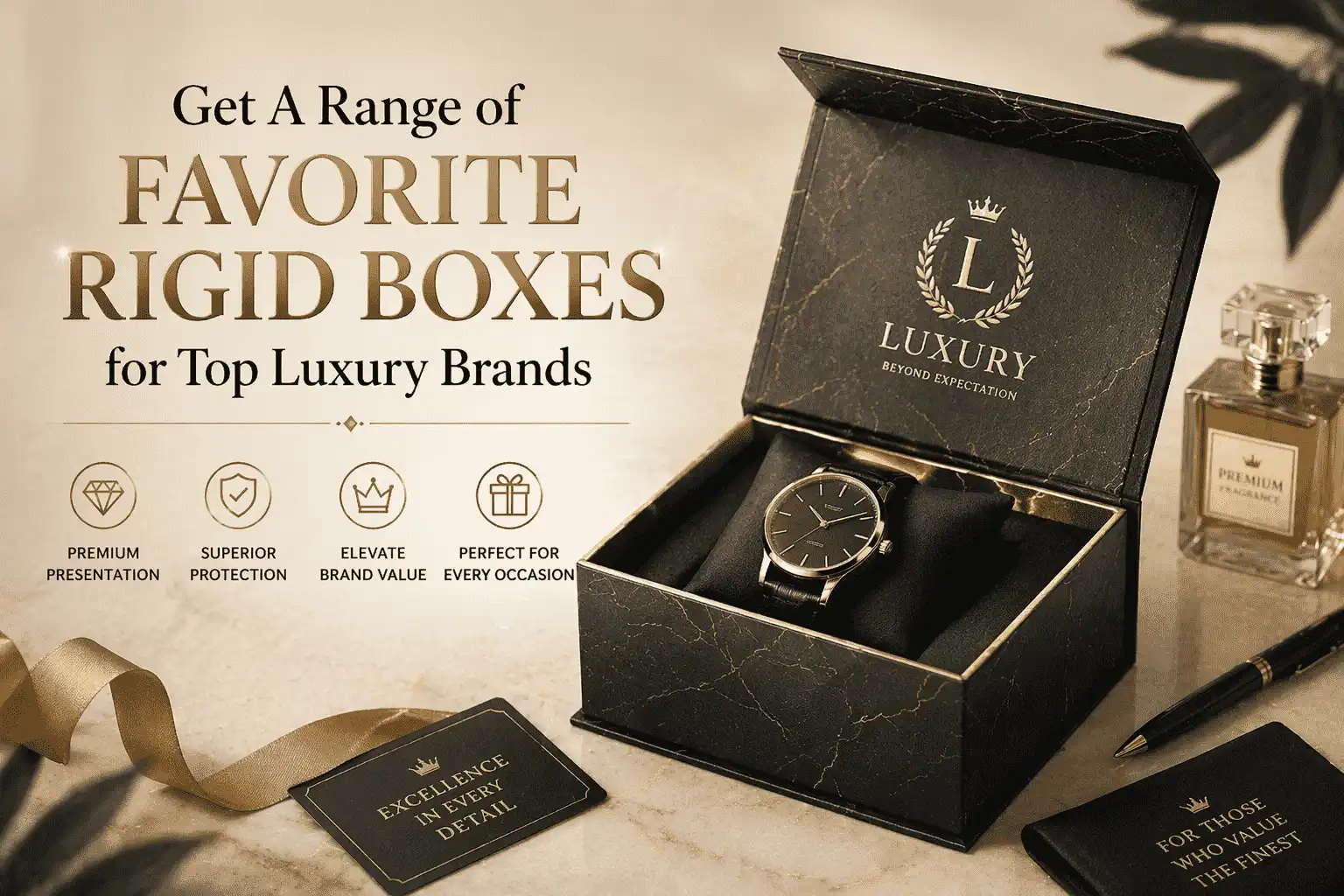
Get A Range of Favorite Rigid Boxes for Top Luxury Brands
When we talk about packaging that genuinely elevates a luxury brand, the conversation always turns to premium rigid box solutions. These strong, carefully made boxes do a lot more than just hold goods; they also show what the brand stands for, make unboxing moments that people will never forget, and keep valuable things safe while they're in transit. Luxury names in electronics, jewelry, makeup, and high-end stores depend on handmade rigid boxes to stand out in crowded markets. The right packaging partner knows that each box is a reflection of your brand's personality. They combine structural engineering with visual talent to create packaging that speaks to picky customers and supports your market position.
Understanding Rigid Boxes and Their Role in Luxury Packaging
What Makes Rigid Boxes Essential for Premium Brands
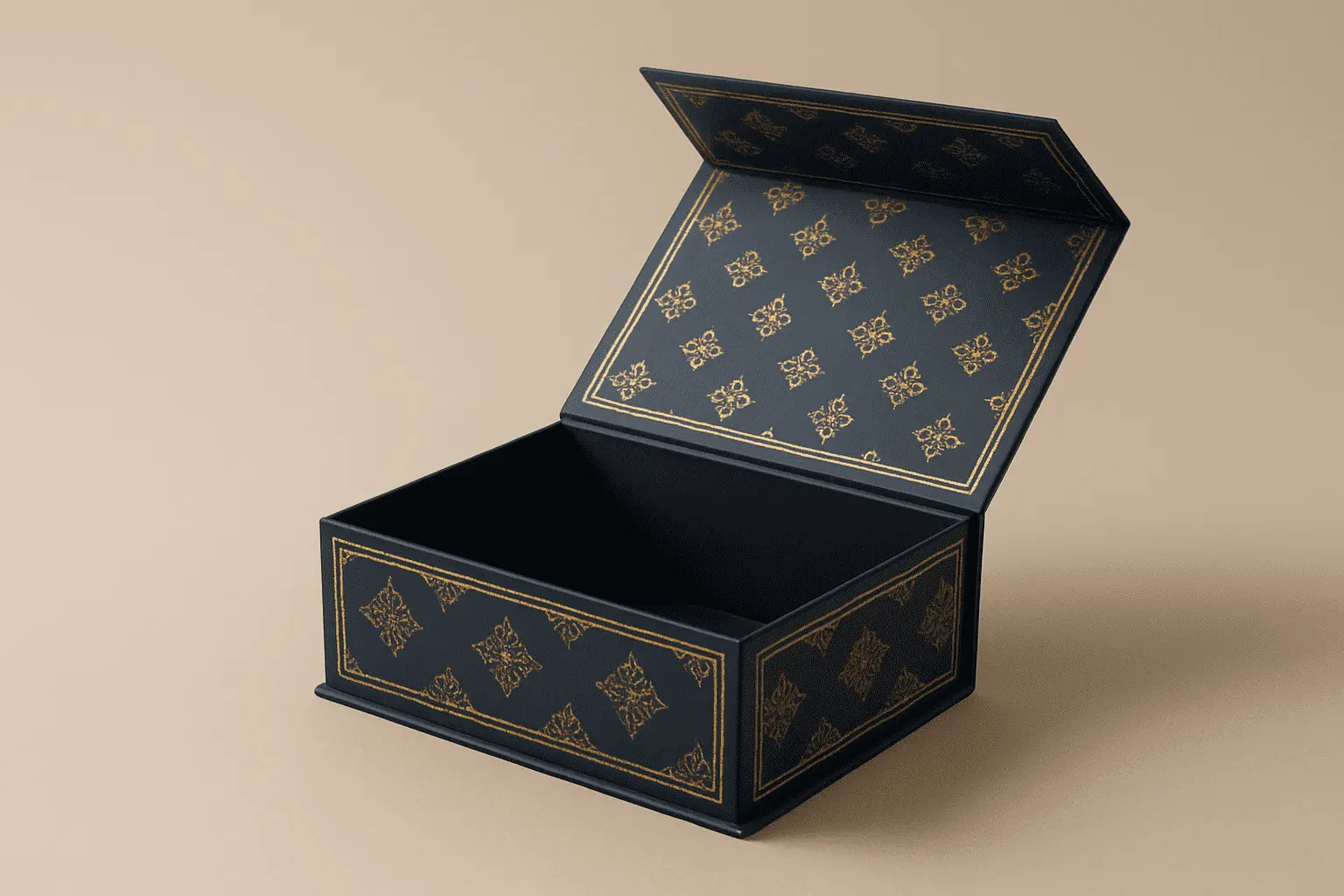
Rigid boxes are different from regular folding packages because they are stronger and look better. These boxes are shipped fully formed, unlike flexible packing that comes flat and needs to be put together. They keep their shape and structural stability throughout the supply chain. The thickness and density of the paperboard used—usually between 250g and 400g, based on the weight of the item being protected and how well it needs to be protected—keep the contents safe and give the package an obvious air of quality. Luxury brands like this type of packaging because it shows how much care and craftsmanship went into making the goods. It also makes the whole customer experience consistent in terms of how it looks and feels.
Diverse Structural Designs for Different Applications
Shoulder-neck styles add an extra panel between the base and the lid, which gives the container more depth and makes it seem more valuable. Magnetic-closure boxes have secret magnets inside the panels. This lets the lids snap shut with satisfying accuracy while keeping the outside lines clean by not showing any clasps or fixings. Collapsible rigid boxes are a new type of combination that has the strength of traditional setup boxes but can be folded flat-packed for easy storage and lower shipping costs. This is a useful feature for brands that need to manage a lot of overstock or launch new products at certain times of the year.
Manufacturing Excellence Behind Every Box
Using techniques for surface finishing turns printed sheets into experiences that you can feel. UV-coats protect the ink and make things look more three-dimensional by adding shine or matte effects. Metallic details that catch light and draw attention to names or design elements are added by cold and hot foil-stamping. Embossing makes textures that are raised and feel good to touch, while debossing makes features that are slightly depressed. Soft-touch finishes make surfaces feel like silk, which is a subtle sign of luxury. When put together in smart ways, these finishes can create contrast and visual ordering that help the eye move across the surfaces of packages.
Comparing Rigid Boxes with Other Packaging Solutions
Evaluating Durability and Protection Standards
Rigid boxes fill this need by blending strong protection with nice looks. When it comes to protecting fragile items like glass bottles, computer parts, or cosmetics, the dense chipboard core is much better than folding boxes at resisting compression and puncture. The wrapped outside gets rid of the factory look of corrugated materials, leaving smooth surfaces that can be used for high-resolution printing and high-end finishes. This two-in-one feature lets brands get rid of extra layers of packaging, which saves materials and keeps security standards high across complicated delivery networks.
Presentation Quality and Brand Perception
This elevated appearance has a direct effect on how people think about the company and how loyal they are to it. Research shows that the quality of the package affects how much people think a product is worth, which in turn affects their decision to buy again. When luxury brands buy handmade rigid boxes, it's not because they want to waste money; it's because they want to build their brand in a way that will benefit them in the long run through happier customers and positive word-of-mouth. The package tells a story about the product and should be shown off and used again instead of being thrown away right away.
Cost Considerations and Production Efficiency
Another important trade-off is between stock and unique choices. Stock boxes have standard sizes and patterns, so they can be made quickly and with lower minimums, but they don't offer much in the way of customization. Custom solutions need more money to buy tools and more orders, but they give brands the right fit and help them stand out from the competition. Many brands use a mix of methods, using standard choices for tests or restricted releases while making unique packaging for their main product lines. Understanding these economics helps procurement pros make choices that are good for both the budget and building the business.
Choosing the Right Rigid Box for Your Luxury Brand: Procurement Insights
Supplier Evaluation and Quality Assurance
The ability to make things is just as important. The standard levels that can be reached and the speed of production depend on how advanced the printing equipment is. German-made presses, like Heidelberg systems, have the registration accuracy and color consistency that are needed for complicated patterns with tight limits. Multiple die-cutting tools allow for quick turnaround on orders of all sizes, so work doesn't slow down during busy times. Specialized manual-assembly teams do complex custom work that automatic lines can't do. They support unique structural designs that set high-end goods apart in crowded markets.
Navigating Minimum Orders and Bulk Logistics
Minimum-order numbers can be hard for new brands or people trying out new product ideas. Due to the cost of tools and the difficulty of setting up production, luxury rigid box packing usually has higher minimums than simple folding boxes. These limits are affected by things like custom die-cutting, special finishes, and the complexity of the structure. Understanding the economic reasons behind MOQs helps buying teams arrange realistic numbers that balance the costs of keeping inventory with the benefits of lower prices per unit.
Customization Options That Strengthen Brand Identity
Print design is more than just putting names on plain boxes and Rigid box packaging. Using color systems in a smart way, like CMYK process printing or Pantone-spot colors, makes sure that the brand is consistent everywhere the customer interacts with it. Pantone matching is important when certain brand colors need to look the same on digital platforms, marketing materials, and packages. Standardization helps people recognize and believe goods, so they can be found right away, even before they read the brand names.
Sustainability as a Procurement Priority
As customers and government agencies call for more business responsibility, choices about packaging are being affected by environmental factors more and more. FSC-certified materials show that the paperboard comes from forests that are handled in a way that protects wildlife and the health of the environment. Packaging that can be recycled or broken down naturally means that it can be handled by the systems that are already in place for dealing with trash, instead of adding to the amount of trash that ends up in landfills. These features are important, especially in places like Europe, where brands are responsible for managing the end-of-life of their products because of rules called "extended producer responsibility."
Showcasing Favorite Rigid Boxes for Top Luxury Brands
Magnetic Closure Boxes for Premium Cosmetics
Cosmetics companies always choose magnetic closures because they look nice and can be used again and again. Hidden magnets in the lid and base panels make snap closures that feel good and let you know the quality of the product. Since there are no obvious fasteners, the outside looks clean, and the closure is safe while being handled and displayed.
These styles work great in stores where the packaging needs to stand out from the other items on show while also keeping the items inside safe from damage during transport. The structure's rigidity keeps it from breaking when stacked or kept, so the product looks great even after a long time on the shelf. Many customers say they keep these rigid boxes long after they've used the goods inside, using them to store jewelry or organize small things. This gives the brand a longer presence than regular packaging usually does.
Drawer Boxes for Luxury Electronics and Accessories
Electronics companies that sell to high-end customers like drawer-style rigid boxes because they show off their technical know-how through their design. The sliding drawer system makes it easy to get to the items inside, just like the exact building of the devices inside. Ribbon pulls or finger lines that are recessed make opening easier while adding fine details that make the unpacking process more special. Many interior plans have more than one section for extras like charging cords, manuals, and warranty cards. This keeps things organized in a way that is easy to find and shows that the user-experience design was thought out.
High-end watch brands have long used trunk boxes—rigid boxes—to show off their watches next to inner materials that go well with them, like suede or velvet. This style of presentation works well for high-end headphones, smart devices, and items that need to draw attention to how they look. The sturdy design keeps fragile electronics safe during shipping and gives customers faith in the quality of the product—the packaging is strong enough to meet the engineering standards that customers expect from high-end tech goods. Many owners keep these boxes for long-term storage because they know they protect devices the best when they're not being used.
Telescopic Boxes for Gift and Limited Edition Products
The standard style of telescopic stiff boxes works well for holiday gift lines and limited editions. The separate lid and base design adds to the excitement of opening, as receivers lift off the outer shells to find what's inside. This two-piece structure makes production easier than with more complicated structural designs, and the appearance is clearly better. Brands often set the outside of lids apart with bright graphics and metallic finishes, while the inside is usually decorated with clashing colors or patterns. This creates visual variety that makes the finding process more fun.
Luxury food and drink brands use flexible boxes to make holiday gift sets, premium chocolate assortments, and aged spirits look more elegant. The sturdy design keeps fragile items safe while letting people know how important the event is. These formats are also used by corporate gifting programs to show respect and thanks to important clients or workers who have been with the company for a long time. The boxes themselves become keepsakes that are often displayed widely or used to store valuable things. This gives the brand a lasting presence that adds value long after the sale.
How to Successfully Procure Rigid Boxes for Your Business
Establishing Clear Specifications and Requirements
It's important to be clear about the sample criteria and approval steps. Tell us how many actual rigid box samples you need for your own review, for photography, or for approval by a store partner. Set the amounts of differences that are allowed for color matching, finish quality, and correctness in measurements. Figure out who has the final say on things to avoid confusion that could slow down projects. These direct explanations set the stage for effective teamwork and cut down on unnecessary back-and-forth that wastes time and resources.
Evaluating Proposals and Building Partnerships
When you form long-term partnerships, you build value for both sides that goes beyond individual deals. Suppliers who know your brand, your product plan, and your quality standards can give you more useful advice on new projects. They might give your company more attention during busy times or give you better prices as your number grows. Loyalty and regular contact build trust, which makes it easier to have tough talks when problems do arise. Instead of seeing your relationships with suppliers as just business deals, see them as strategic partners. Spend time getting to know their strengths and weaknesses and making sure they understand your business goals.
Managing Production and Quality Control
After orders are made, keep in touch regularly during production rounds. For example, you should ask for information when the artwork is approved, the materials are bought, the printing is done, the assembly begins, and the final packing is done. These points of contact give us a chance to deal with new problems before they get worse. Many suppliers are happy to share pictures or videos of the production process, which show how things are going and give customers faith in the quality of the work. This openness is especially helpful for complicated custom tasks where seeing is believing.
Conclusion
Luxury rigid boxes are smart investments in brand branding, customer experience, and product security that pay off in many areas of a business. The right package partner has advanced production skills, can help with collaborative design, and is dedicated to quality standards that are in line with your brand's values. Every choice you make, from choosing the materials to delivering your goods, affects how people see and use them. Purchasing managers who carefully approach packaging—balancing how it looks with how it works, how much it costs with how much it's worth, and how the brand is positioned with how long it will last—gain competitive benefits that last in markets where experience is becoming more important than features alone.
FAQ
What distinguishes luxury rigid boxes from standard packaging options?
Luxury rigid boxes are made from luxury paperboard bases that range in weight from 250g to 400g. These are much thicker and more sturdy than folding cartons. They come fully put together instead of flat-packed, so the structure stays strong during shipping. With modern finishing methods like metal-stamping, embossing, and magnetic seals, you can see and feel things that you can't do with regular packing. Protecting valuable items and improving brand image through presentation quality that shows skill and attention to detail are two things that these boxes do.
How do I determine the appropriate paperboard weight for my products?
Paperboard is chosen based on the weight, frailty, and delivery conditions of the product. Items that weigh less than 500 grams usually work well with 250g to 300g bases, which cuts down on costs and shipping weight. Products that weigh between 500 grams and 2 kilograms can use 350g paperboard, which is more resistant to crushing. Items that weigh more than 2 kilograms or are very fragile need 400g bases to be protected as much as possible. Talk to your supplier about your unique needs. Based on their experience with similar projects, they can suggest the best products.
What kinds of licenses should I ask rigid box providers to give me?
The ISO-9001 quality-management certification makes sure that production methods and tools for preventing defects are always the same. The use of ISO-14001 for environmental management shows a dedication to long-term business goals. FSC-certified approval proves that paperboard comes from forests that are handled in a responsible way. This is important for brands that care about the environment. G7-color-management approval makes sure that printing is accurate and stays the same from one production run to the next. All of these references show that the business is run professionally and meets the international quality and environmental standards that luxury brands around the world look for.
Can rigid boxes be designed for cost-effective shipping and storage?
When assembled, collapsible-rigid boxes fold flat-packed, taking up a lot less room and costing a lot less to ship than regular setup boxes. These hybrid solutions keep the high quality of display and structural strength while also providing organizational benefits that are especially useful for programs with a lot of participants. Talk about collapsible choices during the first design meetings to find a mix between the need for a high-end look and the need for high-level functionality.
Partner with a Trusted Rigid Box Manufacturer
Since 1999, Fetching Printing has provided top-notch luxury rigid box solutions that have helped brands succeed in cosmetics, gadgets, high-end retail, and other areas. Our 50,000-square-meter building has 15 automatic die-cutting machines, German-Heidelberg printing presses, and a skilled team of 100 hand assembly experts who can make even the most complicated custom designs. We keep our ISO-9001, ISO-14001, G7-certified, and FSC-certified certifications, which show that we care about quality, the environment, and color management. Throughout the whole process of packing, from the first idea to structural testing and full-scale production, our engineering team works closely with clients.
We offer a wide range of substrates, such as SBS-C1S, SBS-C2S, and Brown Kraft, in weights ranging from 250g to 400g, so we can perfectly match your product needs. Cold and hot metal printing, UV-coating, embossing, and soft-touch treatments that improve the look are some of the advanced surface finishing options. Our streamlined buying process starts with a consultation about your needs, moves on to solution creation and professional samples, and ends with a successful order placement backed by clear production tracking. If you need magnetic-closing boxes, telescopic designs, or new collapsible forms, we can provide you with high-quality packaging that builds brand identity and gets customers involved. Get in touch with us at public@fetchingprinting.com to talk about how we can improve your luxury package program.
References
1. Robertson, Gordon L. Food Packaging: Principles and Practice. Third Edition. CRC Press, 2012.
2. Soroka, Walter. Fundamentals of Packaging Technology. Fifth Edition. Institute of Packaging Professionals, 2014.
3. Klimchuk, Marianne Rosner, and Sandra A. Krasovec. Packaging Design: Successful Product Branding From Concept to Shelf. Second Edition. John Wiley & Sons, 2013.
4. Stewart, Bill. Packaging Design Strategy: What to Know About Colors, Graphics, and Printing for Effective Brand Design. Proactive Press, 2018.
5. Jedlicka, Wendy. Sustainable Graphic Design: Tools, Systems, and Strategies for Innovative Print Design. John Wiley & Sons, 2009.
6. Hanlon, Joseph F., Robert J. Kelsey, and Hallie E. Forcinio. Handbook of Package Engineering. Fourth Edition. CRC Press, 2018.

Based on your location and order quantity, you will have the opportunity to receive a limited time free shipping promotion!

Corporate Purpose