For some customer segments, cost savings outweigh visual appeal, making lightweight paperboard an ideal choice for folding cartons. These materials are great for packing a lot of consumer goods, making promotional items, and putting up temporary displays. Lighter weights and protection layers are often used in food packing. Boxes for cereal, snacks, and frozen foods are all examples of successful lightweight solutions. Instead of just looking at material thickness, the key is to optimize the structure design. Lightweight options are good for retail packing for mass-market goods. 200-250 GSM paperboard is often used for electronics, personal care items, and home things. Advanced die-cutting methods use smart fold designs and support areas to make up for the lighter material. Lighter materials are better for the environment because they use less fiber and have less of an effect on shipping. Companies that want to be more environmentally friendly often ask for lighter weights that still work well by using new design ideas and material engineering.
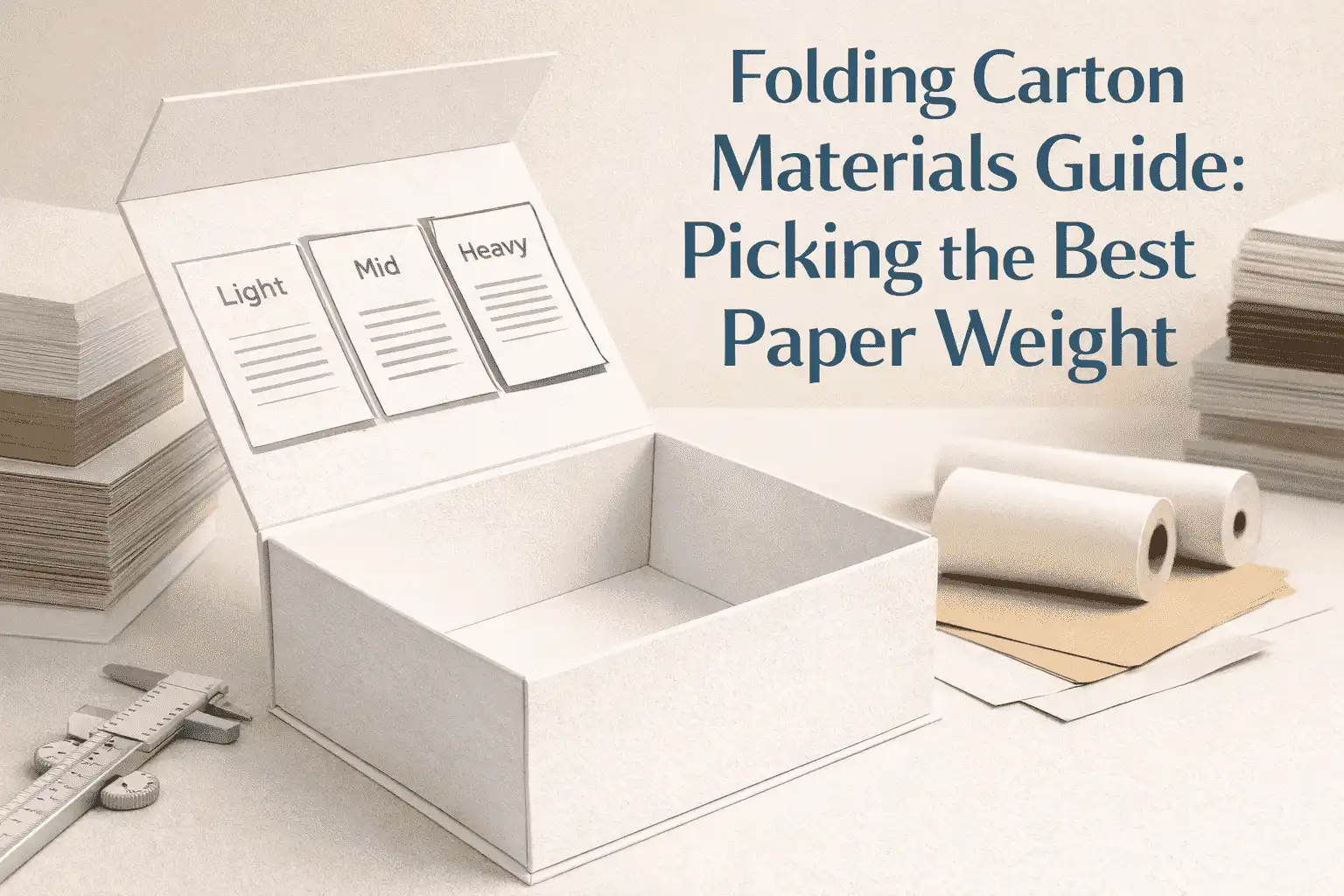
Folding Carton Materials Guide: Picking the Best Paper Weight
Selecting the right paper weight for your folding carton requires balancing product protection, visual appeal, and cost considerations. Paper weight directly influences structural integrity, print quality, and perceived value. Heavier weights provide enhanced durability and premium tactile experience, while lighter options optimize costs without compromising functionality. Understanding your product's specific requirements, shipping conditions, and target market expectations guides material selection. This comprehensive guide explores various paperboard weights, their applications, and how they impact your packaging performance across different industries.
Understanding Paperboard Weight Fundamentals
GSM (grams per square meter) or point thickness standards are often used to measure the weight of cardboard. These measures have a direct relationship with the density, hardness, and blocking qualities of the material. Standard weights range from 200 GSM for light uses to 400 GSM or more for high-end luxury packing. Weight and ability don't always go in a straight line. There are some differences between 300 GSM SBS (Solid Bleached Sulfate) board and 300 GSM recyclable paperboard. The types of fibers used, the ways they are made, and the coatings that are used all affect the end product's qualities in ways other than weight. Multi-layer building methods are used to make paperboard today. Because of these advances, total weights can be lowered while still keeping certain performance traits. Knowing about these new technologies helps buying teams make smart choices that balance functionality needs with low costs. Certifications of quality are very important when choosing materials. Manufacturers who are ISO-certified keep performance and weight limits uniform. This uniformity is necessary for the automatic packing line to work well and for the results of the products to be reliable.
Lightweight Options: 200-250 GSM Applications
Medium Weight Solutions: 250-350 GSM Range
The ideal weight range for most business uses is in the middle weight range. This line is a great compromise between structure performance, print quality, and cost-effectiveness. These requirements are met by most normal store packages. Medium-weight paperboard is often used for cosmetic and personal care packages. The structures of these items need to be strong, and they need to be able to support high-quality images and finishing choices. The weight of the material allows for metal printing, embossing, and other high-end finishing methods. Medium-weight options are being used more and more in e-commerce packing. When you buy something online, you need packaging that can stand up to the stresses of shipping while also being fun to open. This weight range gives enough security without making shipping too expensive because the package is too heavy. When making corrugated cartons, medium weight facings and curved cores are often put together. This way of building increases the amount of strength to weight while keeping costs low. The method works especially well for shipping packages and boxes with a bigger size.
Premium Applications: 350+ GSM Heavy Weight
Heavy paperboard shows that it is a quality product and makes you think of a luxury brand. These materials allow for high-tech finishing methods and offer great structure performance and physical joy. Premium weight paperboard is used a lot in the packing of luxury items. Heavy materials are used to strengthen brand placement in jewelry boxes, high-end makeup, and fashion items. The solid feel is directly linked to how much worth and quality are expected. Constructions that are heavy are good for gift wrapping. Premium gift boxes need to be able to handle being handled over and over again without losing their shape. Heavy paperboard can support complicated building plans, like telescoping structures and layouts with many compartments. Heavy-weight materials are often called for in the packaging of high-end electronics. When they are being shipped, smartphone packing, high-end headphones, and other devices need strong protection. When it comes to padding and shock protection, heavy paperboard is the best.
Material Types and Their Weight Characteristics
The print quality on SBS paperboard is superior for folding cartons, delivering consistent results across all weight categories. This material is made from fresh fibers, which make it very bright and smooth. SBS works especially well for tasks that need to print small details and have a high-end look. Recycled paperboard choices are better for the environment and still work well as building materials. Modern recycling methods make products that can be used in food-contact and high-end uses. Choosing the right weight becomes very important for getting the best results out of recycled material. The Clay Coated News Back (CCNB) is both cheap and easy to print on. This kind of material works well for medium-weight jobs where print quality is important but special placement isn't needed. CCNB is a great deal for people who need to package a lot of items. With its natural look and high strength, Kraft paperboard is a great choice. Even when they are lighter, paper materials are better at keeping their shape and not tearing. This choice of material supports strategies for environmentally friendly wrapping while still meeting performance standards.
Industry-Specific Weight Requirements
Food packing rules have a big effect on the choice of paperboard weight. When a material comes into direct contact with food, it needs to have certain protective qualities that are often related to its weight. For frozen food packaging to be able to handle changes in temperature and moisture, it needs to be heavy. Pharmaceutical packaging has to stick to strict weight limits so that it can meet legal requirements. For mechanical filling and closing, these uses need materials with regular qualities. Changes in weight can stop the production line and lead to compliance problems. Automotive packaging gives weights based on how well the parts need to be protected. Heavy car parts need strong packaging that keeps them from getting damaged while they're being shipped. Medium weights may be used for lighter parts with appropriate structural support. When choosing the right weight for electronics packing, static electricity and moisture safety are both taken into account. Materials that offer enough protection while still being cost-effective are needed for sensitive parts. Specifications for weight often include conductivity standards for getting rid of static electricity.
Cost Optimization Strategies
The cost of materials for a folding carton rises directly with paperboard weight, making efficiency in material selection and design crucial for maintaining competitive advantage. Knowing the minimum weight needed for a certain job keeps you from over-specifying and spending money on things that aren't needed. Strategies for buying in bulk can help cover the higher costs of special weights per unit. When you buy a lot of something, you can often get better prices that make heavy materials more affordable. Annual contracts offer even more perks for cost security. Optimizing structural design cuts down on the amount of material needed without affecting performance. Using advanced die-cutting methods, reinforcing designs are made that make the most of power. Computer modeling helps guess how well something will work before it is actually tested. As part of efforts to cut down on waste, exact weight specifications are used to keep cutting loses to a minimum. Custom size cuts down on wasteful materials and improves the ease of shipping. In addition to saving money, these methods are better for the earth.
Testing and Quality Assurance
Edge crush strength tests show that paperboard works well at different weights. This number tells you what the real-world stacking strength and compression resistance will be. Knowing these connections helps you choose the right weights for different uses. Print quality checking makes sure that results are the same for all weights. For heavier materials, you may need to change the way the ink is made or the printing pressure. Quality management systems keep an eye on these factors to make sure that the result is always the same. To make sure that materials work, environmental testing mimics the conditions of shipping and storage. Testing for temperature, humidity, and vibrations show how different weights handle pressure in the real world. This information helps choose the right weight for difficult tasks. For certification compliance, testing methods must be written down and materials must be able to be tracked. For FSC certification, food safety approvals, and export paperwork to work, the item must meet uniform standards. Tolerances for weight are part of these compliance rules.
Conclusion
Selecting the right paperboard weight is critical for folding cartons, impacting structural integrity, print quality, product protection, and brand perception. Lightweight boards optimize cost and sustainability, medium weights balance performance and aesthetics, and heavy weights convey premium quality. Material type, certifications, and testing ensure consistent results across applications. Advanced manufacturing, design optimization, and quality assurance enable brands to achieve functional, visually appealing, and cost-effective packaging tailored to market and product requirements.
Transform Your Packaging with Expert Folding Carton Solutions
Fetching Printing delivers precision-engineered folding carton solutions tailored to your exact weight specifications and performance requirements. Our ISO-certified manufacturing processes ensure consistent quality across all paperboard weights, from lightweight promotional packaging to premium luxury applications. As your trusted folding carton manufacturer, we combine advanced machinery, sustainable materials, and expert engineering to optimize your packaging investment. Contact public@fetchingprinting.com to discuss your specific requirements and discover how our comprehensive material expertise transforms packaging challenges into competitive advantages.
The evolution of paperboard technology continues expanding possibilities for weight optimization without performance compromise. Advanced fiber treatments, coating innovations, and multi-layer constructions enable lighter materials with enhanced properties. Understanding these developments helps packaging professionals make informed decisions that balance cost, performance, and sustainability goals.
Successful paperboard weight selection requires comprehensive analysis of product requirements, market positioning, and operational constraints. This holistic approach ensures optimal material choices that support brand objectives while maintaining cost effectiveness. Partnering with experienced manufacturers provides access to material expertise and testing capabilities essential for informed decision-making.
References
1. Thompson, M.R., & Johnson, K.L. (2023). "Paperboard Weight Optimization in Modern Packaging Applications." International Packaging Technology Review, 45(3), 127-145.
2. Chen, H., Williams, P.D., & Roberts, S.A. (2022). "Structural Performance Analysis of Multi-Weight Folding Carton Systems." Packaging Engineering Quarterly, 38(2), 89-104.
3. Martinez, C.E., & Brown, J.K. (2023). "Sustainable Weight Selection Strategies for Commercial Paperboard Packaging." Green Packaging Solutions Journal, 15(4), 203-218.
4. Anderson, R.F., Taylor, M.J., & Wilson, L.P. (2022). "Quality Assurance Protocols for Weight-Variable Paperboard Manufacturing." Industrial Packaging Standards, 29(7), 156-171.
5. Kumar, S.R., & Davis, A.M. (2023). "Cost-Performance Optimization in Folding Carton Material Selection." Packaging Economics Review, 41(1), 67-82.
6. Smith, D.A., Johnson, R.T., & Lee, K.S. (2022). "Advanced Testing Methodologies for Paperboard Weight Specification." Materials Testing in Packaging, 33(5), 245-260.

Based on your location and order quantity, you will have the opportunity to receive a limited time free shipping promotion!

Corporate Purpose