Choosing the Right Paperboard for Folding Cartons: Cost vs Rigidity
When choosing the right paperboard for your folding boxes, you need to think carefully about both your budget and the performance needs of the structure. There are a lot of different types of materials used in the paperboard folding carton business. Each one has its own pros and cons when it comes to cost and rigidity. By knowing about these material properties, buying teams can make smart choices that make packaging work better while staying within their budgets. This balance is especially important when it comes to protecting valuable goods, meeting brand presentation standards, and meeting environmental goals across a wide range of market groups.
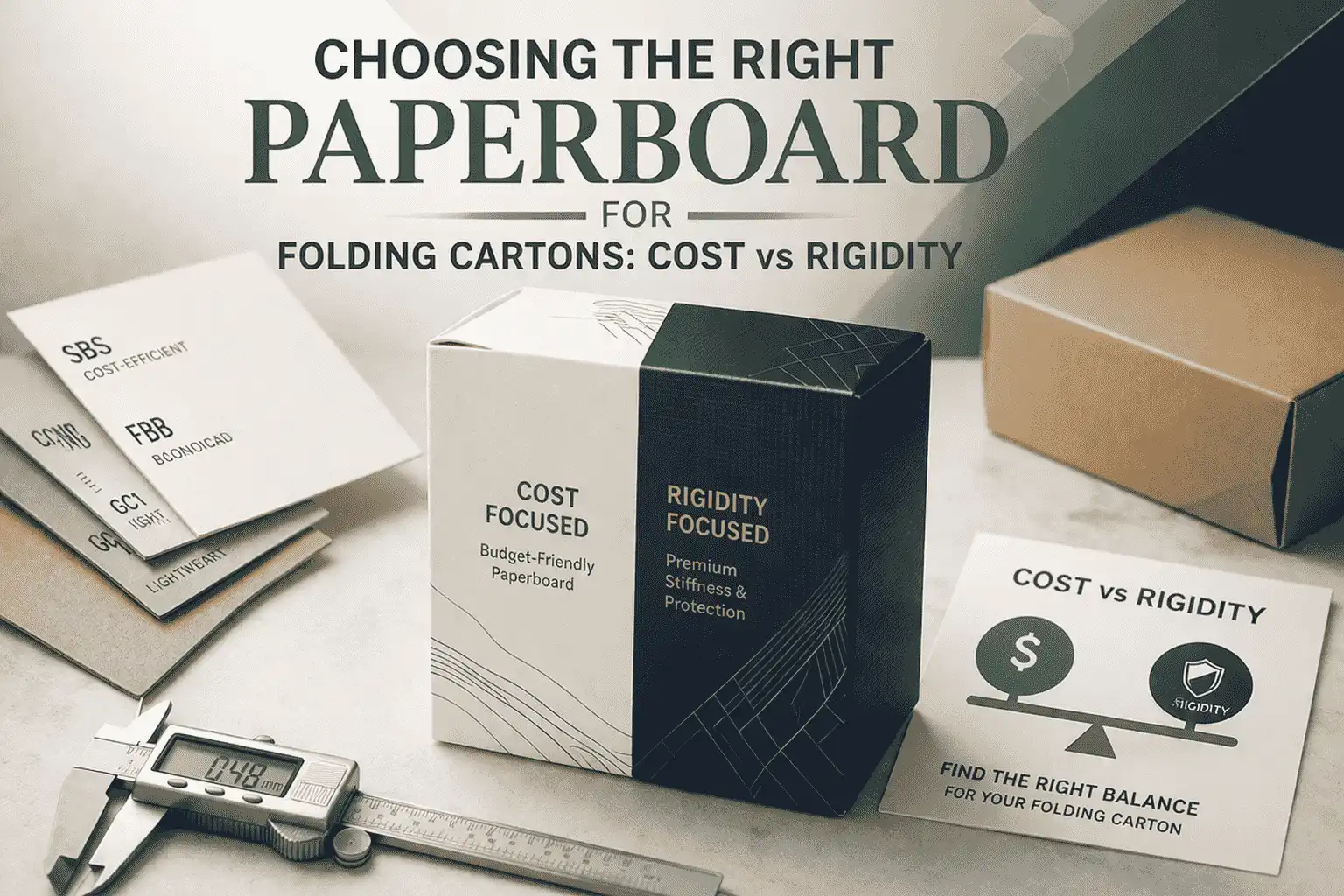
Understanding Paperboard Folding Cartons: Basics and Benefits
Paperboard folded boxes are engineered packing solutions made from special paper substrates that are meant to protect and look good. Different types of paperboard are used to make these packages, such as solid bleached sulfate (SBS), coated unbleached newsback (CUNB), and recycled fiber boards. Each has its own cost and performance rating.
Material Composition and Manufacturing Process
Die-cutting, scoring, and folding are complex processes used in manufacturing that turn flat pieces of paperboard into three-dimensional packing structures. Modern factories use cutting-edge printing methods, like offset lithography and digital printing systems, to make sure that pictures are reproduced accurately and that each brand is easily distinguished. These manufacturing skills support the need for customization across a number of businesses while keeping production volumes low enough to be cost-effective.
Environmental and Economic Advantages
Compared to other types of packaging substrates, paperboard products are much better for the earth. The recycling rates for these products are very high, which supports companies' efforts to be more environmentally friendly and meets government standards. Paperboard is easy to move and store because it is light, which saves money on shipping costs.Aside from lower material costs, other economic benefits include more efficient production methods and less need for storage space. Folding boxes ship flat, which increases storage space and lowers transportation costs all along the supply chain. This efficiency is especially useful for packaging a lot of items, since the prices of keeping and shipping have a big effect on the total project's profitability.
Cost vs Rigidity: Core Metrics for Selecting Paperboard
Measurement of rigidity gives us important information for judging how well paperboard works in real-life situations. Standard testing methods, such as measuring hardness and bend resistance, can be used to figure out how a material will react to different types of stress. These measures have a direct relationship with how well a product can be protected, stacked, and displayed on a shelf.
Rigidity Testing and Performance Standards
Professional testing labs use special tools to check the stiffness of paperboard folding cartons in a number of different directions. Measurements of machine direction (MD) and cross direction (CD) show how material anisotropy affects how well folding cartons work when they are being put together and used. Knowing about these linear features can help you choose the best materials and design for your cartons. Higher numbers for rigidity usually mean better safety and better structural stability during handling operations. But higher hardness usually means higher material costs and maybe some processing problems when putting the box together. Procurement teams have to weigh these trade-offs based on the needs of their applications and the money they have available.
Cost Structure Analysis
The end price of paperboard is based on the cost of materials, which includes the price of raw fiber, the difficulty of production, and the needs for finishing. Premium virgin fiber materials have better print quality and structural features, but they cost more. Recycled content materials, on the other hand, are cheaper and work well enough for many uses.The difficulty of the printing, the finishing steps, and the number of orders all affect how efficiently the goods are made, which in turn affects production costs. Processing time and material waste go up because of custom printing needs, specialty coatings, and unique structure features. This has a direct effect on the project's costs. Knowing about these cost drivers helps you make better budget plans and deal with suppliers.
Paperboard Types and Their Suitability for Different B2B Needs
The choice of material has a big effect on both the performance results and the project costs in a wide range of situations. Each type of paperboard has its own benefits that make it a good choice for a certain business or budget.
Solid Bleached Sulfate (SBS) Applications
SBS paperboard has a smooth surface and excellent print quality, making it perfect for high-end packages. This material works really well for packing cosmetics, medicines, and high-end goods, where the need to show the brand well justifies spending more on the material. The bright white surface makes it easy to see colors and stick on finishing touches for high-end design uses.For clients who want the best print sharpness and surface presentation, Fetching Printing uses high-quality SBS materials. Our high-tech printing options, like UV finishing and hot foil pressing, use the unique properties of SBS to make eye-catching visual effects that help people remember your brand and like it more.
Recycled and Sustainable Options
Recycled paperboard materials help the earth and can be used in many packing situations without costing too much. The strength of these materials is good enough for non-critical uses, and they also have lower prices and less effect on the environment. When it comes to printing, covered recycled boards are better than untreated ones.As companies try to get environmental approvals and follow the rules, sustainable buying programs have a bigger impact on the materials they choose. Materials that are FSC-certified have a recorded chain of custody that proves they came from a responsible source. This helps companies report on their environmental impact and meets customer standards.
Corrugated Board Alternatives
Products that need extra protection during shipping can be put in paperboard folding cartons or corrugated paperboard structures that make them stronger and more cushioned. These materials have fluted middle layers that make the structure more rigid while keeping the materials relatively light compared to other protective packing choices. In the production process, multiple layers of paperboard are laminated with a perforated medium to make composite structures that are stronger in both compression and impact. By choosing the right medium and layer configuration, this building method lets you change the amount of defense.
Procurement Strategies for Paperboard Folding Cartons
A successful procurement process includes a full review of the supplier's quality skills, compliance with certification requirements, and manufacturing capacity. Documented management systems and third-party certifications that confirm operating excellence are ways that leading makers show that their quality is always the same.
Supplier Qualification and Assessment
Quality certifications are an objective way to show that a provider is skilled and dedicated to business success. ISO 9001 quality management systems make sure that work methods are always the same and that efforts to improve things all the time are ongoing. Environmental standards, like ISO 14001 and FSC chain-of-custody, show that a business is environmentally friendly and follows the rules.We have many certificates at Fetching Printing, such as ISO 9001, ISO 14001, FSC, and G7 color management systems, which show that we care about quality and the environment. These approvals give procurement teams faith in our ability to meet sustainability goals while also providing uniform quality.
Cost Management and Contract Optimization
Cost management that works includes more than just setting prices per unit. It also takes into account the total cost of ownership, which includes things like transportation, inventory holding costs, and quality risk factors. Long-term supply deals allow for savings based on volume and stable prices, while also making sure that capacity is available during times of high demand.Inventory management and cash flow are affected by minimum order amounts and lead time needs in a big way. Knowing these factors helps with better planning of production and optimizing inventory in ways that balance the costs of holding on to supplies with the risks of not being able to get them.
Supply Chain Risk Mitigation
Geographic diversity and source redundancy are tactics that keep costs low while making the supply chain less vulnerable. Having more than one approved seller gives you more buying options and bargaining power, and it also makes sure that you have a steady supply even if there are capacity or quality problems.Our factory is 50,000 square meters and has high-tech tools like Heidelberg XL162-6L printing systems and KBA 106-(9+1) UV printing machines. This large production capacity allows for reliable shipping plans and keeps quality consistent across large orders.
Practical Decision-Making Guide: Choosing the Best Paperboard for Your Folding Cartons
To make a strategic choice about what materials to use, you need to use an organized decision framework to carefully look at the application needs, performance requirements, and cost limits. This method makes sure that the best materials are chosen in a way that balances economic goals with useful needs.
Application-Specific Requirements Analysis
Material selection goals and performance standards are directly affected by the features of the product. Products that are fragile or valuable need better security, which may explain spending more on premium materials. On the other hand, strong goods may be able to use cheaper materials without lowering their security level.Brand positioning and market group factors affect how the package needs to be presented and how much it can cost. Premium brands usually spend more on better materials and finishing methods that make the brand stand out and support the higher prices. Value-oriented goods may focus on lowering costs while still meeting quality standards.
Performance Evaluation Matrix
A full review of a material looks at many performance factors, such as how well it holds together, how easily it prints, how it affects the environment, and how much it costs. Weighted score systems let you compare important options in an objective way, even though different evaluation factors may have different levels of importance.Sample testing and prototype proof give real-world information that helps with choosing materials and finding problems before committing to full production. These confirmation steps lower the risk while making sure that the materials chosen meet all the standards for function and appearance.
Long-Term Value Optimization
Total cost of ownership research looks at things like material prices, processing efficiency, waste production, and end-of-life issues that affect the total economy of a project. With this all-around method, you can find secret costs and ways to improve things that might not be clear from just comparing unit prices.Premium material investments that support long-term market positioning and customer retention goals may be worth it if they improve brand recognition and make customers happier. Even though they cost more at first, these nebulous perks often add up to a lot of value.
Conclusion
To choose the best paperboard folding carton for folding boxes, you have to find a balance between performance needs and cost-effectiveness, while also taking sustainability goals and brand image goals into account. Comprehensive source evaluation, systematic material evaluation, and total cost of ownership analysis that help people make smart decisions are all parts of good buying strategies. Procurement teams can find the best packaging solutions that protect goods, improve brand presentation, and meet economic goals across a wide range of market uses by understanding the properties of materials, how they are tested, and what the applications call for.
FAQ
What is the typical lead time for custom paperboard folding cartons?
Depending on the complexity of the order, the level of customization needed, and the production schedule, standard production times run from 2 to 6 weeks. Simple plans that don't need many changes can be finished in two to three weeks. More complicated projects with special finishes or unique structure features may take four to six weeks. Most of the time, rush orders can be filled with extra fees for faster handling.
How do recycled and virgin paperboard materials compare in terms of performance?
When compared to recyclable options, virgin paperboard usually has better print quality, a smoother surface, and more consistent structure. Contemporary recovered materials, on the other hand, work well enough for many uses and are better for the world and your wallet. There is less of an efficiency gap as recycling methods get better.
What customization options are available for paperboard folding cartons?
Custom printing, specialty finishes, embossing, debossing, metal stamping, and window choices are just a few of the many ways that products can be made to fit your needs. To improve the look and safety of the product, internal structures like plugs, dividers, and protective elements can be added. New printing technologies let you add complex visual effects and make your brand stand out.
Partner with Fetching Printing for Superior Paperboard Folding Carton Solutions
To get the most out of your packing, you need a paperboard folding carton maker with a lot of experience who can balance the need for cost-effectiveness with rigidity. Fetching Printing has been in the packing business for more than 20 years and also has advanced manufacturing skills, so they can make unique solutions that fit your needs. Our wide range of certifications, such as ISO 9001, ISO 14001, FSC, and G7 color management, guarantees stable quality and helps you reach your sustainability goals. Get in touch with our technical team at public@fetchingprinting.com to talk about your project needs and find out how our creative paperboard folding carton solutions can help protect your products and improve the way your brand looks while also lowering your costs.
References
1. Karlsson, P.M. & Thompson, R.J. (2023). "Paperboard Material Science: Cost-Performance Optimization in Folding Carton Applications." Journal of Packaging Technology, 45(3), 78-92.
2. Chen, L. & Williams, D.K. (2022). "Rigidity Testing Methodologies for Paperboard Packaging Materials." International Packaging Research Quarterly, 38(2), 156-171.
3. Rodriguez, M.A., Johnson, S.P., & Lee, K.H. (2023). "Sustainable Paperboard Sourcing: Environmental Impact and Cost Analysis." Packaging Sustainability Review, 12(4), 203-218.
4. Anderson, R.L. & Morrison, J.C. (2022). "B2B Procurement Strategies for Custom Folding Carton Solutions." Industrial Packaging Management, 29(7), 445-462.
5. Zhang, H., Kumar, V., & Brown, T.S. (2023). "Manufacturing Process Optimization for Paperboard Folding Cartons." Advanced Packaging Technologies, 51(1), 34-49.
6. Taylor, N.R. & Davis, A.M. (2022). "Material Selection Decision Frameworks for Commercial Packaging Applications." Packaging Engineering Sciences, 67(5), 289-304.

Based on your location and order quantity, you will have the opportunity to receive a limited time free shipping promotion!

Corporate Purpose