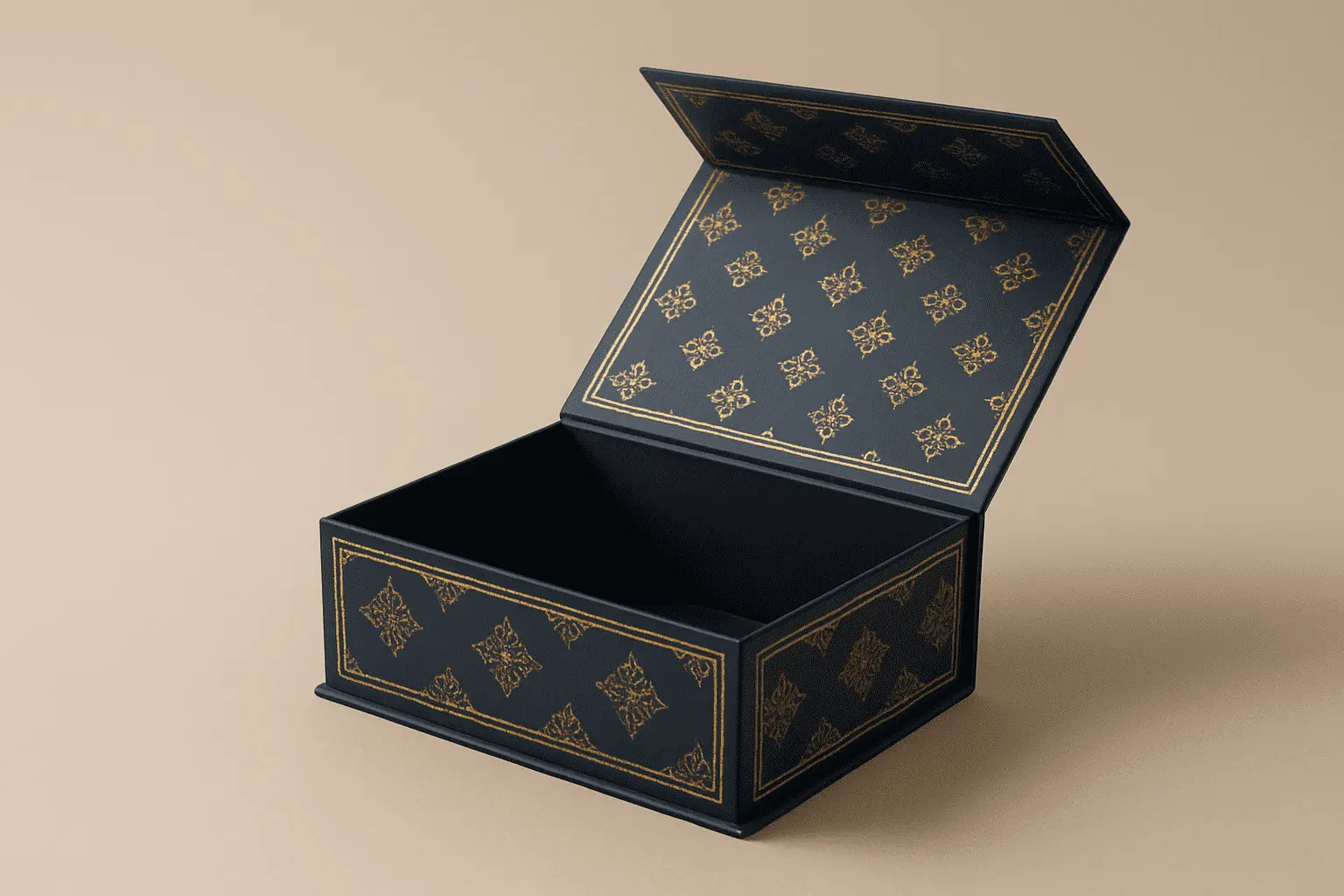
Luxury Packaging: Rigid Boxes That Ship Flat
Picture this: You've invested thousands in premium product packaging, only to watch your shipping costs spiral out of control. Traditional rigid gift boxes consume warehouse space, demand oversized freight containers, and drain your budget before a single customer opens their purchase. The collapsible rigid box solves this critical challenge by delivering the same luxurious unboxing experience while shipping completely flat, cutting logistics expenses by over 60% compared to conventional rigid packaging.

What Makes Collapsible Rigid Boxes the Smart Choice for Premium Brands?
The collapsible rigid box represents a breakthrough in packaging engineering that bridges the gap between cost efficiency and luxury presentation. Unlike traditional rigid boxes that arrive fully assembled and consume significant cubic space during transport, these innovative structures ship flat and assemble quickly at your facility or fulfillment center. The technology behind collapsible rigid boxes involves precision die-cutting, strategic crease placement, and intelligent structural design that allows the box to fold flat without compromising its rigidity once assembled. Premium brands in cosmetics, electronics, and gourmet food sectors have embraced this solution because it maintains the substantial, high-end feel customers expect while dramatically reducing the environmental footprint and financial burden of shipping. The construction typically involves mounting printed specialty paper onto rigid chipboard, then engineering fold lines that enable the box to collapse without visible creasing on the exterior surfaces. When assembled, these boxes are virtually indistinguishable from traditional rigid boxes in terms of structural integrity and visual appeal.
Understanding the Three-Size System for Different Product Heights
Collapsible rigid box manufacturers have developed sizing systems to accommodate various product dimensions while maximizing the flat-shipping advantage. The Large size suits magnetic gift boxes with product heights between 100-150mm, making it ideal for premium electronics, luxury skincare sets, or boutique wine packaging. Medium collapsible rigid boxes accommodate products in the 50-100mm height range, perfect for jewelry boxes, high-end cosmetic collections, or artisan chocolate assortments. The Tiny size handles products from 20-50mm in height, catering to watch packaging, delicate jewelry pieces, or compact tech accessories like wireless earbuds. Each size category utilizes proprietary structural designs protected by patents, ensuring consistent quality and assembly reliability. The engineering behind these sizes involves calculating the optimal ratio between flat shipping dimensions and assembled box volume, allowing brands to achieve maximum space savings without sacrificing the luxurious presence their products demand on retail shelves or in direct-to-consumer shipments.
Cost Savings Beyond Standard Collapsible Designs
Traditional rigid gift boxes present substantial shipping and storage challenges that directly impact profit margins. A standard rigid box maintains its three-dimensional form during transport, meaning a container that could hold 1,000 flat boxes might only accommodate 150-200 pre-assembled rigid boxes. The collapsible rigid box technology reduces shipping and storage costs by more than 60% compared to conventional rigid packaging, but the innovation doesn't stop there. Even when compared to standard collapsible rigid box designs available in the market, advanced proprietary structures can save an additional 20-30% in costs through optimized fold patterns and material efficiency. These savings compound across the supply chain—reduced warehouse space requirements lower your monthly storage fees, decreased shipping volume means lower freight costs per unit, and the ability to stock more packaging in the same space improves inventory management and reduces stockout situations. For brands shipping internationally or operating multiple fulfillment centers, these cost reductions can represent hundreds of thousands in annual savings while maintaining the premium positioning that rigid packaging provides.
Material Selection for Collapsible Rigid Box Excellence
The foundation of any exceptional collapsible rigid box begins with material selection, where the choice of paperboard directly influences printing quality, structural integrity, and overall customer perception. Premium brands typically select from several primary materials, each offering distinct advantages for specific applications.
Premium Coated Paperboards for Vivid Printing
SBS C1S (Solid Bleached Sulfate Coated One Side) stands as the preferred choice for collapsible rigid boxes requiring exceptional print quality on the exterior while maintaining functional versatility on the interior surface. This premium-grade paperboard consists of 100% virgin bleached wood pulp, with one side treated with a clay coating that creates an exceptionally smooth printing surface. The bright white appearance produced from fully bleached fibers delivers a clean, uniform foundation for vibrant color reproduction and fine detail work. The uncoated reverse side provides superior glue adhesion during the mounting process when the printed sheet bonds to rigid chipboard, ensuring long-term structural stability. SBS C1S excels in applications where the interior of the collapsible rigid box requires writing surfaces or where glue adhesion is critical to assembly integrity. This material supports advanced finishing techniques including foil stamping, embossing, and spot UV coating, allowing brands to create multi-dimensional tactile experiences that elevate perceived value. SBS C2S (Solid Bleached Sulfate Coated Two Sides) takes premium printing a step further by featuring smooth, high-gloss surfaces on both faces of the board. This dual-sided coating ensures excellent print quality whether the collapsible rigid box design incorporates interior printing for brand storytelling or product information. The exceptional whiteness and brightness of SBS C2S enhances image contrast and delivers a premium visual appearance that luxury brands demand. Produced entirely from bleached chemical pulp, this material meets the hygiene standards required for food-contact applications and pharmaceutical packaging, making it the top choice for collapsible rigid boxes containing edible products or wellness items. The superior stiffness and strength characteristics ensure that the box maintains its shape and resists deformation during the assembly process and throughout its lifecycle. SBS C2S's compatibility with lamination, UV coating, foil stamping, embossing, and die-cutting makes it ideal for creating highly customized collapsible rigid box designs that demand both sides of the packaging communicate brand values effectively.
Cost-Effective and Eco-Conscious Alternatives
CCNB (Clay Coated News Back) provides an economical solution for collapsible rigid boxes where budget considerations balance against quality requirements. This paperboard features a white clay-coated front surface that delivers good print quality, while the grey recycled back made from newsprint provides structural strength at a lower cost point than fully bleached boards. The high recycled content supports sustainability initiatives that resonate with environmentally conscious consumers, making CCNB an excellent choice for brands emphasizing their eco-friendly commitments. Despite its recycled composition, CCNB maintains decent stiffness and thickness suitable for collapsible rigid boxes in retail environments. The material performs reliably with offset and flexographic printing processes, ensuring sharp and vibrant visuals that capture attention on crowded shelves. Brands in the toy, footwear, and non-food-contact consumer goods sectors frequently select CCNB for their collapsible rigid box projects because it offers significant cost savings while maintaining professional presentation standards and supporting circular economy principles through its recyclable composition. Brown Kraft paper introduces a natural, earthy aesthetic to collapsible rigid boxes that aligns perfectly with organic, handcrafted, or vintage-style brand positioning. Made from unbleached wood pulp, this material retains its characteristic brown hue and visible fiber texture, creating an authentic, rustic hand-feel that communicates environmental stewardship and artisanal quality. The high tensile strength, tear resistance, and abrasion resistance of Brown Kraft make it suitable for collapsible rigid boxes that may encounter rough handling during shipping or retail display. When appropriately treated, the material offers good moisture resistance, protecting contents in various storage conditions. Beyond its functional benefits, Brown Kraft's naturally attractive appearance reduces or eliminates the need for extensive printing, lowering production costs while delivering a distinctive look that differentiates products in markets saturated with glossy, heavily printed packaging. This material choice particularly resonates with consumers seeking sustainable, minimalist packaging that reflects values of environmental responsibility and authentic craftsmanship.
Rigid Board Foundations for Structural Integrity
The structural foundation of collapsible rigid boxes relies on rigid chipboards that provide the necessary stiffness while allowing for the fold mechanisms that enable flat shipping. Grey chipboard, manufactured by compressing recycled pulp under high heat and pressure, delivers excellent resistance to bending and compression while maintaining light weight and cost efficiency. Its multi-ply construction creates sturdy support for the printed and laminated exterior layers of collapsible rigid boxes, ensuring the assembled package maintains its premium appearance throughout handling and display. The smooth, even surface of grey chipboard accepts coatings and laminations readily, making it ideal for the die-cutting, folding, and coating processes essential to collapsible rigid box production. Despite being much lighter than wood or plastic alternatives, grey chipboard exhibits good abrasion and moisture resistance under normal conditions, maintaining form and appearance over time while reducing shipping costs through its favorable weight characteristics. Duplex chipboard offers a refined alternative by bonding a smooth, high-brightness white coating to a grey recycled-pulp core, combining attractive finish with economical substrate. This dual-layer construction provides a bright white face for top-quality printing while the natural grey core made from recycled pulp delivers rigidity and flex resistance. Available in thicknesses from approximately 0.3 to 1.5mm, duplex chipboard excels in cutting, die-cutting, and folding operations essential to collapsible rigid box production. The coated surface adds hardness without cracking during the folding and assembly processes, while the ultra-smooth surface proves ideal for offset, digital, UV, and foil-stamping finishing processes. The recycled grey pulp core significantly lowers material costs compared to virgin fiber boards, making duplex chipboard perfect for high-volume collapsible rigid box production where cost efficiency meets quality requirements. The white coated face delivers sharp color reproduction and a clean, professional appearance that customers associate with premium packaging, while the fully recyclable composition addresses growing consumer demand for sustainable packaging solutions.
Advanced Finishing Techniques That Elevate Collapsible Rigid Boxes
The true luxury of collapsible rigid boxes manifests through sophisticated finishing techniques that transform printed paperboard into tactile, visually stunning packaging experiences. These processes work in harmony with the collapsible structure, adding premium details without compromising the box's ability to ship flat and assemble efficiently.
Surface Enhancement Technologies
UV coating technology applies liquid UV-curable varnish to either selected areas (spot UV) or the entire sheet surface, then instantly cures it under UV light to create high-gloss finishes and tactile contrast. When applied to collapsible rigid boxes, spot UV creates dramatic visual effects by highlighting logos, product names, or decorative elements with mirror-like shine while surrounding areas maintain a matte finish. This contrast draws the eye and invites touch, creating memorable unboxing moments that customers photograph and share on social media. The UV coating process adds minimal thickness to the paperboard, ensuring the collapsible rigid box maintains its ability to fold flat without cracking or delamination at crease points. Overall UV coating provides a protective layer that enhances scratch resistance and moisture protection while delivering a uniformly glossy appearance that communicates premium quality and attention to detail. Hot foil stamping transfers metallic or pigmented foil onto specific areas using heat and pressure, delivering the premium metallic sheen that luxury brands demand. Gold, silver, rose gold, and colored foils add instant elegance to collapsible rigid boxes, making logos and decorative accents shimmer and catch light from multiple angles. The foil stamping process works exceptionally well with the flat surfaces of quality paperboards used in collapsible rigid box construction, creating crisp, well-defined metallic details that resist wear during handling and shipping. Advanced holographic foil stamping techniques laser-etch microscopic patterns into foil, then heat or UV-cure to lock in vibrant, angle-shifting colors and subtle textures that provide premium anti-counterfeiting features alongside stunning visual appeal. These holographic effects create packaging that appears to move and change as customers view it from different angles, generating the "wow factor" that drives social sharing and brand recognition.
Embossing and debossing techniques press paperboard between male and female dies to create raised (emboss) or recessed (deboss) three-dimensional relief patterns that add tactile interest and visual depth. When applied to collapsible rigid boxes, these processes must be carefully engineered to avoid interfering with fold lines and collapse mechanisms. Skilled manufacturers position embossed or debossed elements on flat panel areas where they enhance the premium feel without compromising structural integrity or assembly efficiency. Blind embossing (without ink or foil) creates subtle, sophisticated texture that reveals itself through touch and changing light conditions, appealing to luxury brands seeking understated elegance. Registered embossing combines raised relief with precise color printing or foil stamping, creating multi-layered effects where visual and tactile elements align perfectly to maximize impact. These dimensional finishing techniques transform collapsible rigid boxes from containers into branded experiences that communicate craftsmanship and quality.
Combination Finishing for Maximum Impact
The most impressive collapsible rigid boxes employ combination finishing techniques that layer multiple processes for extraordinary visual and tactile effects. Spot UV combined with embossing creates elements that are simultaneously shiny and raised, enhancing both visual shine and tactile relief in a single branded feature. This combination proves particularly effective for logos, where the raised, glossy element becomes an unmistakable signature that customers associate with premium quality. The production sequence matters significantly—applying spot UV coating first, then embossing the same area, ensures optimal adhesion and prevents cracking or flaking of the UV coating during the embossing process. Manufacturers experienced in collapsible rigid box production understand how to engineer these combination finishes so they enhance rather than interfere with the folding mechanisms that enable flat shipping. Lamination processes apply thin plastic films over printed sheets to enhance scratch resistance, moisture protection, and overall durability while offering aesthetic choices between gloss and matte finishes. Gloss lamination yields a shiny surface that makes colors appear more vibrant and saturated, creating packaging that demands attention in retail environments. Matte lamination delivers a low-sheen, soft-touch effect that communicates sophistication and restraint, appealing to luxury brands that prefer understated elegance over flashy presentation. Soft-touch or velvet lamination adds a distinctive tactile quality that invites handling and creates sensory engagement beyond visual appeal. When applied to collapsible rigid boxes, lamination must be carefully controlled at fold lines to prevent cracking or delamination during the collapse and reassembly processes. Advanced manufacturers use specialized crease-scoring techniques that accommodate laminated surfaces, ensuring the finished collapsible rigid box maintains its premium appearance through multiple collapse and assembly cycles.
The Production Process Behind Quality Collapsible Rigid Boxes
Understanding the production workflow reveals why partnering with experienced manufacturers ensures consistent quality and reliable delivery of collapsible rigid boxes that meet luxury brand standards.
From Design to Physical Sample
The ordering process begins with demand consultation, where customers send contact emails detailing their packaging requirements, target markets, and specific challenges they aim to solve with collapsible rigid boxes. Solution design follows as business managers conduct content docking with customers, discussing structural requirements, material preferences, finishing options, and budget parameters. This collaborative phase proves critical because collapsible rigid box engineering requires balancing aesthetic desires with practical considerations about assembly efficiency, shipping optimization, and production economics. Professional implementation transforms approved concepts into physical samples made according to customer requirements, allowing for hands-on evaluation of materials, structural integrity, assembly ease, and visual impact. The sample confirmation process identifies necessary refinements before full production begins, preventing costly errors and ensuring the final collapsible rigid boxes precisely match brand expectations. Successfully placed orders follow customer confirmation and deposit payment, triggering production scheduling and material procurement.
Manufacturing Steps That Ensure Quality
Printing transfers designs onto paperboard using offset, digital, or flexo presses selected based on run length, color requirements, and substrate characteristics. Offset lithography delivers superior color accuracy and fine detail reproduction for collapsible rigid boxes requiring photography, gradients, or intricate patterns. Digital printing offers flexibility for short runs, variable data printing, or rapid prototyping without the setup costs of offset plates. Flexographic printing excels for certain substrates and simple graphics where production speed and economy matter most. Surface finishing enhances and protects printed sheets by adding coatings, varnishes, or specialty films that deliver the gloss, matte, or textured appearance specified in the approved design. This step integrates UV coatings, laminations, and protective layers that ensure collapsible rigid boxes withstand handling, shipping, and display without degradation. Lamination or mounting bonds printed sheets to sturdier rigid substrates, creating the structural foundation that gives collapsible rigid boxes their characteristic substantial feel. This critical step requires precise adhesive application and pressure control to ensure permanent bonding without bubbles, wrinkles, or delamination. The mounted boards then cure under controlled conditions before advancing to die-cutting operations. Die-cutting employs custom metal dies to cut precise shapes, create windows, and trim edges while simultaneously impressing crease lines that enable the collapsible function. The die design represents proprietary intellectual property in advanced collapsible rigid boxes, as the crease patterns and fold geometries determine how efficiently the box collapses flat and how easily it assembles. Gluing and assembly operations fold and secure die-cut pieces together, though for collapsible rigid boxes this step may occur at the brand's facility rather than the manufacturer's plant, depending on shipping and storage strategies. Packing and shipping prepare finished collapsible rigid boxes by stacking them flat, bundling or cartoning them for protection, then palletizing and dispatching them to clients where they await assembly and filling.
Quality Control Through Advanced Manufacturing
Automatic visual positioning box production lines represent the technological advantage that separates premium collapsible rigid box manufacturers from conventional packaging suppliers. These systems use cameras and computer vision to verify precise alignment during lamination, die-cutting, and gluing operations, ensuring every box meets exact specifications. The visual positioning technology proves especially valuable for collapsible rigid boxes because the complex fold patterns and multiple layers demand accuracy measured in fractions of millimeters. Any misalignment during lamination or die-cutting could prevent proper collapse or assembly, rendering entire production runs unusable. The automated inspection identifies and removes defective units before they reach customers, maintaining quality standards while reducing production time and labor costs. Short production times enabled by automated manufacturing allow brands to respond quickly to market demands, launch seasonal products with confidence, and maintain lean inventory practices that reduce carrying costs.
Conclusion
Collapsible rigid boxes deliver luxury presentation with logistics efficiency, solving the cost challenge premium brands face in competitive markets.
Cooperate with GUANGZHOU FETCHING COLOR PRINTING & PACKAGING LTD.
As a leading China collapsible rigid box manufacturer with over 20 years of experience, we serve more than 1,000 loyal customers worldwide. Our 35,000m² facility houses 300+ skilled employees and advanced equipment including KBA106-(9+1) UV printing machines and Heidelberg XL162-6L presses. We hold ISO14001-2015, ISO9001-2015, Smeta, G7, FSC, and Disney certifications, ensuring quality and compliance. Our ten+ packaging engineers provide expert solutions in structure development, material application, and process technology. Whether you need High Quality collapsible rigid box options, competitive collapsible rigid box price quotes, or reliable China collapsible rigid box supplier partnerships, we deliver comprehensive solutions. As your trusted China collapsible rigid box factory and China collapsible rigid box wholesale provider, we offer collapsible rigid boxes for sale across food, cosmetics, personal care, and electronics industries. Contact us at public@fetchingprinting.com to discuss your packaging needs. Your success is our success.
References
1. "Rigid Box Market: Global Industry Trends, Share, Size, Growth, Opportunity and Forecast 2023-2028" - IMARC Group Research Division
2. "Sustainable Packaging Design: Tools, Systems and Strategies for Innovative Package Design" - Wendy Jedlicka, Design Researcher and Author
3. "The Complete Guide to Packaging Materials and Structural Design" - Packaging Technology Integrated Solutions (PTIS) Editorial Team
4. "Folding Cartons and Rigid Boxes: Manufacturing Standards and Quality Control" - International Safe Transit Association (ISTA) Technical Committee
5. "Premium Packaging Solutions: Engineering Innovations in Collapsible Structures" - Journal of Applied Packaging Research, Dr. Robert Kimmel and Dr. Diana Twede

Based on your location and order quantity, you will have the opportunity to receive a limited time free shipping promotion!

Corporate Purpose