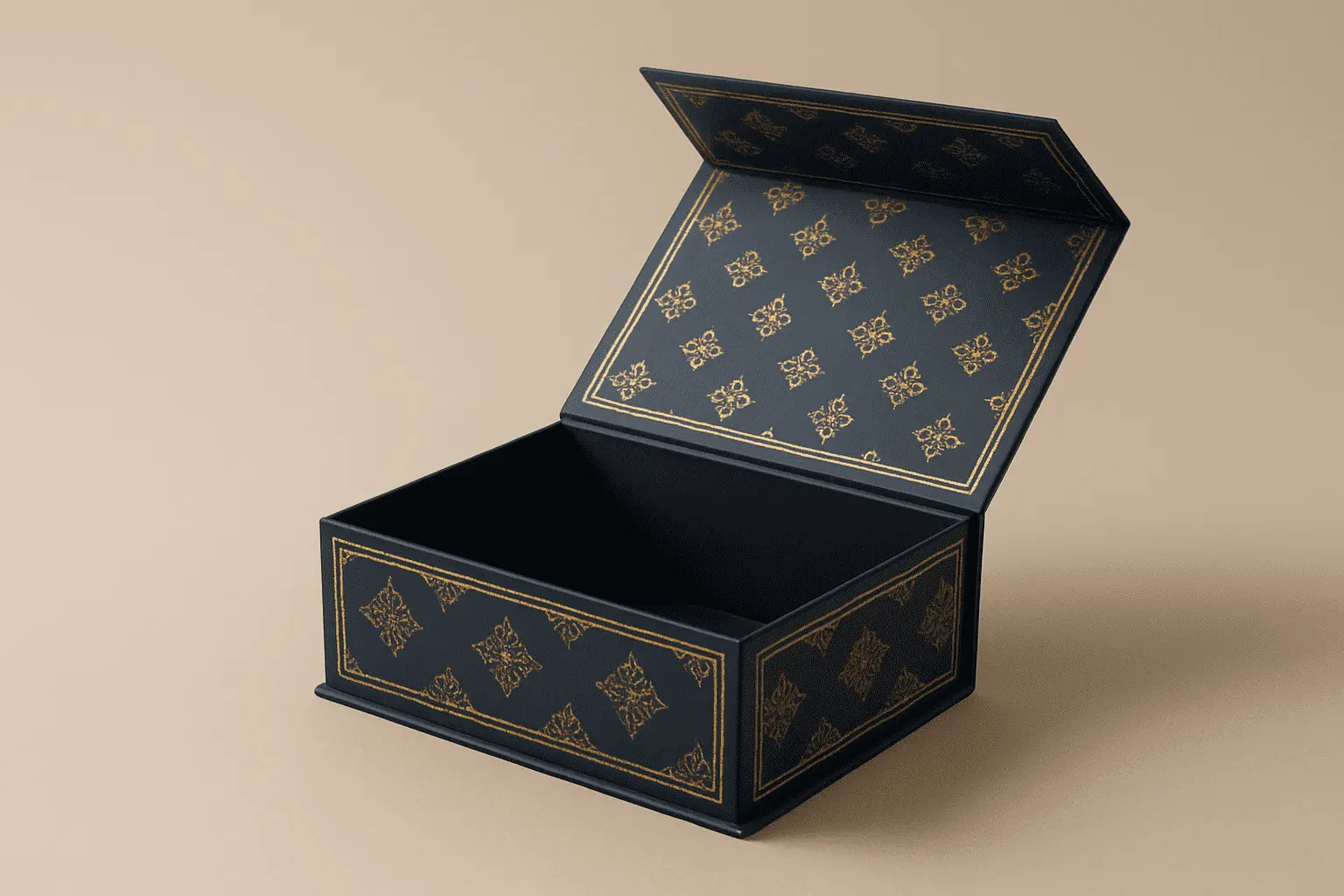
How much storage space can foldable rigid boxes save in warehouses?
Picture your warehouse overflowing with thousands of empty packaging boxes consuming valuable real estate, your storage costs escalating monthly, and your logistics budget stretched thin due to inefficient space utilization. This scenario represents the daily challenge facing countless businesses worldwide when managing conventional rigid packaging inventory. Foldable rigid boxes offer a transformative solution to this persistent problem, delivering storage space reductions of 60-80% compared to traditional rigid boxes while maintaining the premium appearance and structural integrity that luxury products demand for optimal brand presentation and customer satisfaction.

Understanding the Space-Saving Engineering of Foldable Rigid Boxes
The revolutionary design of foldable rigid boxes emerges from sophisticated packaging engineering that reimagines how premium boxes can function throughout their lifecycle. Unlike conventional rigid boxes that maintain their three-dimensional form regardless of whether they contain products, foldable rigid box solutions incorporate precision-engineered fold lines and specialized construction techniques that enable complete collapse when empty. These advanced structures utilize carefully planned crease patterns combined with premium materials such as grey chipboard or duplex chipboard cores laminated with high-quality surface papers like SBS C1S or SBS C2S, creating packaging that transitions seamlessly between flat storage configuration and assembled luxury presentation. The engineering process demands meticulous attention to material thickness, fold radius calculations, and structural reinforcement points to ensure the foldable rigid box maintains durability through repeated assembly and disassembly cycles without compromising the premium aesthetic that distinguishes luxury packaging from standard cartons.
Material Selection and Structural Integrity
The foundation of effective foldable rigid box design begins with selecting appropriate substrate materials that balance flexibility with rigidity. Grey chipboard serves as an excellent core material due to its high-density compressed recycled pulp construction, which provides substantial thickness and structural strength while remaining sufficiently pliable for precise folding operations. This material typically ranges from 1.5mm to 3mm thickness depending on box dimensions and intended product weight, with thicker boards reserved for larger foldable rigid boxes designed to accommodate heavier luxury items. The grey chipboard core gets enhanced through lamination with premium surface materials that elevate visual appeal while adding protective properties. SBS C1S paperboard, featuring a smooth coated surface on one side and uncoated reverse for superior adhesive bonding, creates an ideal printing surface that accepts offset lithography, digital printing, and specialty finishing techniques including hot foil stamping, embossing, and spot UV coating. For applications requiring exceptional print quality on both visible surfaces, SBS C2S provides dual-sided coating that enables sophisticated interior and exterior graphics. The marriage of these materials through industrial lamination processes creates composite boards that exhibit the stiffness necessary for maintaining box structure when assembled while incorporating the controlled flexibility essential for reliable folding without material failure or visible stress marks along crease lines.
Folding Mechanisms and Assembly Systems
The practical functionality of foldable rigid box packaging depends entirely on well-designed folding mechanisms that facilitate rapid assembly while ensuring structural stability in the erected configuration. Advanced designs incorporate magnetic closure systems strategically positioned at connection points, enabling quick snap-together assembly that requires no adhesives or tape during setup. These hidden magnets typically utilize neodymium compositions that provide substantial holding force within compact form factors, maintaining secure closures throughout handling and display while remaining invisible in the finished presentation. Alternative assembly approaches employ precision die-cut interlocking tabs and slots that create mechanical connections, though these systems generally require more deliberate assembly sequences and may not offer the immediate gratification of magnetic systems. The most sophisticated foldable rigid boxes integrate both magnetic panels and reinforced corner construction, where additional material layers or structural elements concentrate at stress points to prevent deformation during repeated folding cycles. Production facilities equipped with automatic visual positioning systems can manufacture these complex structures with exceptional precision, using computer-controlled die-cutting and creasing operations that maintain tolerances within fractions of millimeters. This manufacturing accuracy proves critical because even slight variations in fold line placement or component dimensions can compromise assembly ease or final structural performance, potentially frustrating end users and diminishing the premium unboxing experience that justifies foldable rigid box selection over conventional folding carton alternatives.
Quantifying Warehouse Storage Space Savings with Foldable Rigid Boxes
The compelling economic case for transitioning to foldable rigid boxes centers on dramatic warehouse space reduction that translates directly into operational cost savings and enhanced inventory management flexibility. Traditional rigid boxes occupy their full volumetric footprint continuously, whether empty and awaiting use or filled with products ready for shipment. A conventional magnetic closure gift box measuring 300mm x 200mm x 100mm consumes approximately 6,000 cubic centimeters of warehouse space per unit when stored empty, and facilities maintaining inventory of 10,000 such boxes dedicate 60 cubic meters solely to packaging storage. In contrast, the identical product packaged using foldable rigid box technology collapses to approximately 300mm x 200mm x 20mm when flat, reducing the storage volume to just 1,200 cubic centimeters per unit. This 80% volume reduction means the same 10,000-unit inventory occupies merely 12 cubic meters of warehouse space, liberating 48 cubic meters for additional product inventory, new merchandise lines, or improved operational flow. For businesses operating their own warehouse facilities, this space efficiency enables postponement or elimination of costly facility expansions. Companies utilizing third-party logistics providers benefit from reduced storage fees calculated on volumetric basis, with monthly warehousing charges decreasing proportionally to space occupied.
Comparative Analysis: Traditional Versus Foldable Rigid Box Storage
Real-world warehouse scenarios illustrate the magnitude of storage optimization achievable through foldable rigid box adoption across different scale operations. A medium-sized cosmetics brand maintaining packaging inventory for seasonal product launches might stock 25,000 rigid boxes in three standard sizes to accommodate various product configurations. Using traditional rigid construction, these boxes might occupy approximately 150 cubic meters of warehouse space when calculated based on industry-standard packing densities that account for palletization, aisle access, and handling clearances. With warehouse rental rates averaging eight dollars per square foot annually in many metropolitan markets and accounting for vertical storage efficiency, this packaging inventory alone could represent $15,000 to $20,000 in annual warehousing costs attributable solely to empty box storage. Converting this same inventory to foldable rigid boxes delivering 65% volume reduction would decrease storage requirements to approximately 52.5 cubic meters, potentially saving $10,000 to $13,000 annually in warehouse expenses while simultaneously freeing space for approximately $100,000 worth of additional finished goods inventory at typical cosmetics wholesale values. These savings compound over time as businesses grow and packaging requirements expand, with foldable rigid box solutions enabling inventory scaling within existing warehouse footprints that would otherwise necessitate facility expansion or additional storage locations that multiply operational complexity and logistics costs.
Impact on Inventory Management and Supply Chain Flexibility
Beyond direct cost savings, the compact storage characteristics of foldable rigid boxes fundamentally enhance inventory management capabilities and supply chain responsiveness. Businesses can economically maintain larger safety stocks of packaging materials without proportional increases in storage costs, reducing the risk of stockouts during peak demand periods or unexpected sales spikes that would otherwise require expedited packaging orders at premium pricing. This inventory buffer proves particularly valuable for seasonal businesses experiencing concentrated sales periods, such as cosmetics brands launching holiday gift sets or electronics manufacturers releasing limited edition products that demand premium presentation. The ability to store substantial foldable rigid box quantities in minimal space also facilitates just-in-time manufacturing approaches where packaging assembly occurs immediately before product insertion, reducing work-in-process inventory and minimizing the time products spend in partially packaged states. For companies operating multiple distribution centers or utilizing fulfillment partnerships, foldable rigid boxes enable cost-effective pre-positioning of packaging materials at each location without the prohibitive storage costs that conventional rigid boxes would impose. This distributed inventory model reduces shipping times to end customers while maintaining centralized packaging design and quality control that ensures consistent brand presentation across all fulfillment channels.
Size-Specific Storage Solutions: Large, Medium, and Tiny Foldable Rigid Boxes
Effective warehouse space optimization requires matching foldable rigid box sizes to product dimensions and intended applications, with different size categories offering distinct storage efficiency characteristics and use case suitability. Large foldable rigid boxes designed for products with heights between 100-150mm typically serve premium electronics, substantial cosmetics gift sets, or luxury accessories that demand generous packaging proportions for dramatic presentation impact. These larger formats in traditional rigid construction consume substantial warehouse volume, with a single box potentially occupying 12,000 to 20,000 cubic centimeters depending on specific dimensions. When engineered as foldable rigid boxes, these same packages collapse to profiles typically 25-30mm thick, achieving volume reductions approaching 75% that transform warehouse storage economics for businesses dealing with higher-end product categories. Medium foldable rigid boxes accommodating product heights from 50-100mm represent the most versatile category, serving applications from cosmetics and fragrances to jewelry, small electronics, and premium food products. This size range often sees the highest production volumes across industries, making storage efficiency gains particularly impactful for overall warehouse operations. Tiny foldable rigid boxes tailored for products with 20-50mm heights cater to specialized markets including fine jewelry, luxury watches, high-end cosmetics samples, and premium accessories where compact packaging dimensions align with product scales while maintaining proportional presentation quality.
Proprietary Folding Structures and Patent Protection
Advanced manufacturers develop proprietary foldable rigid box structures that optimize the balance between assembly ease, structural performance, and storage efficiency through innovative folding mechanisms protected by patent portfolios. These specialized designs often incorporate unique corner construction techniques that distribute stress across multiple material layers, preventing the corner failure that can compromise box integrity during repeated assembly cycles. Proprietary magnetic positioning systems may utilize specifically arranged polarity patterns that guide correct assembly orientation, making it virtually impossible to assemble boxes incorrectly while accelerating setup speed compared to designs requiring careful alignment of unmarked panels. Patent protection for these innovations creates competitive differentiation for manufacturers while providing customers assurance that their packaging utilizes cutting-edge engineering unavailable through commodity suppliers offering only generic folding box designs. The investment in developing proprietary foldable rigid box structures reflects recognition that superior mechanical performance directly impacts customer satisfaction, brand perception, and the ultimate return on packaging investment. Businesses selecting suppliers with patented designs gain access to continuously refined structures benefiting from ongoing research and development, field testing across diverse applications, and iterative improvements addressing real-world performance feedback that generic designs cannot match.
Material Optimization for Different Size Categories
Each foldable rigid box size category demands specific material specifications that optimize performance characteristics while maintaining efficient storage profiles. Large boxes requiring heights up to 150mm typically employ heavier chipboard substrates in the 2.5mm to 3mm thickness range, providing sufficient structural rigidity to prevent sagging or deformation when assembled and loaded with substantial products. These thicker materials present greater engineering challenges for folding mechanism design, requiring precisely calculated crease depths and strategically positioned reinforcement elements that enable reliable folding without material fracture. Medium-sized foldable rigid boxes generally utilize 1.8mm to 2.2mm chipboard cores that balance adequate strength for most applications with enhanced folding flexibility that simplifies assembly operations and extends viable cycle life. This material range accommodates the broadest spectrum of surface finishing options including UV coating, foil stamping, embossing, and lamination, enabling sophisticated visual effects that elevate brand presentation. Tiny foldable rigid boxes often specify 1.5mm chipboard substrates that provide appropriate rigidity for small-scale structures while permitting the tight fold radii necessary for compact collapsed profiles. The thinner materials common in this category also reduce overall package weight, contributing to shipping cost savings that complement storage space advantages.
Manufacturing Excellence and Quality Assurance in Foldable Rigid Box Production
Producing foldable rigid boxes that deliver consistent performance across thousands of assembly cycles while maintaining premium aesthetic standards requires sophisticated manufacturing capabilities and rigorous quality control processes. Modern production facilities employ automatic visual positioning box production lines that utilize computer vision systems to verify precise component placement during assembly operations, ensuring every fold line, magnetic element, and structural reinforcement occupies its intended position within tolerances measured in tenths of millimeters. These automated systems dramatically reduce manufacturing variability compared to manual production methods, yielding foldable rigid boxes with predictable assembly characteristics and uniform structural performance that meets luxury packaging expectations. The printing phase utilizes offset lithography on premium substrates including SBS C1S and SBS C2S paperboards, with advanced presses delivering vibrant color reproduction and fine detail resolution that creates visually compelling surface graphics. Surface finishing operations apply specialty processes including spot UV coating that creates dimensional contrast between glossy and matte areas, hot foil stamping that adds metallic accents in gold, silver, or custom colors, and embossing techniques that introduce tactile depth elements enhancing perceived quality.
Production Process Integration and Timeline Management
Comprehensive foldable rigid box manufacturing encompasses multiple sequential processes that must coordinate precisely to achieve efficient production flow and predictable delivery timelines. The production sequence typically begins with offset or digital printing operations that transfer custom graphics onto large sheets of SBS paperboard, with press runs sized to maximize material utilization while minimizing waste through strategic layout planning. Following printing, surface finishing processes apply protective and decorative treatments, with UV coating and lamination operations enhancing scratch resistance and moisture protection while gloss or matte laminates influence tactile qualities and visual appearance. The lamination phase bonds printed sheets to grey chipboard or duplex chipboard substrates, creating composite structures that combine decorative surface materials with structural cores in precisely controlled thicknesses. Die-cutting operations then cut these laminated sheets into component panels using custom metal dies engineered specifically for each foldable rigid box design, creating the precise shapes and cut-outs necessary for proper assembly while establishing fold lines through specialized creasing tools integrated within the die assembly. Gluing and assembly processes join die-cut components into final foldable rigid box configurations, with adhesive application requiring careful control to ensure sufficient bonding strength without excessive glue that might interfere with folding mechanisms or create visible excess on finished surfaces. Quality control inspections verify dimensional accuracy, print registration, surface finish quality, and assembly functionality at multiple production stages, identifying any deviations before they propagate through subsequent operations.
Certifications and Environmental Compliance
Quality assurance for foldable rigid box manufacturing extends beyond product specifications to encompass environmental management systems, social responsibility standards, and industry-specific certifications that validate operational excellence and sustainable practices. ISO 9001:2015 Quality Management System certification demonstrates implementation of comprehensive quality frameworks that establish documented procedures, regular process audits, continuous improvement initiatives, and customer satisfaction monitoring throughout production operations. This international standard provides customers confidence that manufacturing processes follow proven methodologies designed to minimize defects and ensure consistent output quality. ISO 14001:2015 Environmental Management System certification verifies establishment of environmental policies and procedures that identify environmental impacts, set reduction targets, implement mitigation measures, and monitor progress toward sustainability goals. Facilities holding this certification demonstrate commitment to responsible resource utilization, waste minimization, and pollution prevention that aligns with corporate social responsibility expectations. FSC certification confirms use of paper materials sourced from responsibly managed forests that maintain biodiversity, protect indigenous rights, and ensure long-term forest health through sustainable harvesting practices. This certification enables brands to make verified environmental claims about their packaging materials, appealing to environmentally conscious consumers who increasingly favor products utilizing certified sustainable materials. G7 Color Management certification validates implementation of advanced color control systems that ensure consistent color reproduction across print runs and production batches, maintaining brand color accuracy that proves critical for luxury packaging where precise shade matching influences perceived quality and brand recognition.
Cost-Benefit Analysis: Foldable Rigid Box Investment Returns
Evaluating the financial merits of transitioning to foldable rigid boxes requires comprehensive analysis extending beyond simple per-unit packaging costs to encompass total logistics expenses, inventory carrying costs, and operational efficiency gains that collectively determine true return on investment. While foldable rigid box unit costs typically exceed conventional folding carton alternatives, they deliver substantial savings compared to traditional rigid boxes when accounting for storage and transportation efficiencies. The proprietary foldable rigid box structures can achieve 60% reductions in combined shipping and storage costs relative to conventional rigid boxes, with additional 20-30% savings compared to standard collapsible rigid box designs that lack advanced folding mechanisms and optimized engineering. These savings emerge from multiple sources including reduced warehouse rental expenses through decreased storage volume requirements, lower inbound freight costs when receiving empty box inventory shipped flat from manufacturers, decreased outbound shipping expenses through improved container utilization when distributing products to retailers or fulfillment centers, and reduced packaging material handling labor through simplified inventory management of compact flat-stored boxes versus bulky assembled alternatives.
Long-Term Financial Impact and Scaling Advantages
The economic benefits of foldable rigid boxes amplify as businesses scale operations and packaging volumes increase, creating compounding returns that grow more substantial over time. A startup cosmetics brand initially requiring 5,000 premium boxes annually might realize modest absolute savings of several thousand dollars through foldable rigid box adoption, but as the business grows to 50,000 or 500,000 annual units, the cumulative savings in storage, shipping, and handling costs can reach tens or hundreds of thousands of dollars that significantly impact profitability and competitive positioning. These savings create financial flexibility enabling increased investment in product development, marketing initiatives, or geographic expansion that drives further growth. The working capital efficiency gains from reduced inventory carrying costs also merit consideration, as businesses maintaining lower value of packaging materials in stock free capital for deployment in higher-return activities while reducing inventory obsolescence risks when packaging designs change to reflect brand evolution or regulatory requirements. For companies utilizing third-party contract packaging or fulfillment services, foldable rigid boxes often enable negotiated rate reductions since service providers pass through their own efficiency gains from compact storage and simplified handling, creating shared value that benefits both parties.
Environmental Sustainability and Brand Value Alignment
Beyond direct financial returns, foldable rigid box adoption delivers environmental benefits that increasingly influence purchasing decisions and brand perception among sustainability-conscious consumers. The reduced shipping volume associated with flat-packed foldable rigid boxes directly decreases transportation fuel consumption and associated carbon emissions throughout the supply chain, from manufacturer to distributor to retailer to end customer. Each stage experiences efficiency gains as more units fit within standard shipping containers, delivery trucks, or cargo aircraft, reducing the total number of trips required to move equivalent quantities of packaging materials or finished products. These transportation efficiencies contribute to corporate sustainability goals while providing concrete environmental metrics that brands can communicate through packaging labels, marketing materials, and corporate responsibility reports. The durability characteristics of quality foldable rigid boxes also enable reuse by end consumers for storage purposes, extending packaging lifecycle beyond initial product presentation and reinforcing brand presence in customer homes while reducing waste generation. Many consumers specifically retain attractive rigid boxes for organizing jewelry, cosmetics, electronics accessories, or other personal items, creating ongoing brand touchpoints that conventional disposable packaging cannot achieve. The recyclability of paperboard materials used in foldable rigid box construction further supports circular economy principles, with grey chipboard and duplex chipboard cores manufactured primarily from recycled fiber content that diverts waste from landfills while reducing virgin material consumption.
Ordering Process and Customer Partnership for Foldable Rigid Box Solutions
Implementing foldable rigid box packaging requires collaborative partnership between brands and manufacturing specialists to ensure final products precisely match application requirements, brand aesthetics, and operational constraints. The process typically initiates with demand consultation where customers communicate product specifications, target quantities, timeline expectations, and budget parameters through contact email or direct conversation with sales representatives. This initial dialogue establishes project scope and enables manufacturers to assess feasibility, identify potential challenges, and provide preliminary guidance regarding material options, size recommendations, and realistic cost ranges. Solution design follows consultation, with business managers conducting detailed content docking to capture comprehensive requirements including exact dimensions, material preferences, printing specifications, surface finishing techniques, structural features, and any special requirements such as insert compartments, ribbon closures, or viewing windows. Technical drawings and three-dimensional renderings visualize proposed designs, enabling customer review and refinement before committing to prototype development. Professional implementation translates approved designs into physical samples that demonstrate actual appearance, tactile qualities, assembly characteristics, and overall functionality. Sample review represents a critical decision point where customers can request modifications to dimensions, materials, colors, finishes, or structural elements before authorizing full production runs that multiply any design shortcomings across thousands or millions of units.
Production Authorization and Quality Verification
Following sample approval, successful order placement formalizes production commitment through deposit payment and purchase order documentation that specifies quantities, delivery schedules, shipping instructions, and acceptance criteria. Manufacturing operations commence according to established production process sequences, with ongoing communication providing production status updates and addressing any questions or clarifications that arise during manufacturing. Quality assurance protocols verify adherence to approved specifications throughout production, with in-process inspections validating material specifications, print accuracy, dimensional tolerances, and assembly functionality. Final inspection procedures examine completed foldable rigid boxes against comprehensive checklists covering visual appearance, structural integrity, folding mechanism operation, and packaging protection to ensure only conforming products advance to packing and shipping stages. Packaging operations carefully bundle finished boxes for transportation protection, typically using shrink wrap, cartons, or palletization appropriate to shipping mode and destination requirements. The flat profile of foldable rigid boxes enables extremely efficient packing configurations that maximize shipping container utilization while providing adequate protection against handling stresses during transit.
Conclusion
Foldable rigid boxes deliver transformative warehouse storage efficiency through innovative engineering that achieves 60-80% space reductions while maintaining premium packaging quality essential for luxury product presentation and brand differentiation.
Cooperate with GUANGZHOU FETCHING COLOR PRINTING & PACKAGING LTD.
As a leading China foldable rigid box manufacturer and China foldable rigid box supplier, Guangzhou Fetching Color Printing & Packaging Ltd. brings over 25 years of packaging excellence since our founding in 1999. Operating from our 35,000㎡ facility with 300+ skilled employees and industry-leading equipment including KBA106 UV printing machines and Heidelberg XL162-6L presses, we serve over 1,000 loyal customers across cosmetics, electronics, and luxury goods sectors. Our China foldable rigid box factory specializes in High Quality foldable rigid box solutions available through China foldable rigid box wholesale programs, offering competitive foldable rigid box price structures and foldable rigid box for sale options that deliver exceptional value. Our ISO 9001:2015, ISO 14001:2015, FSC, and G7 certifications guarantee consistent quality and environmental responsibility. Contact our team at public@fetchingprinting.com to discuss your custom packaging requirements and discover how our proprietary three-size foldable rigid box system can revolutionize your storage efficiency while elevating your brand presentation.
References
1. "Sustainable Packaging Design: Optimizing Storage and Transport Efficiency in Rigid Box Manufacturing" by Dr. Sarah Mitchell, International Journal of Packaging Technology and Science, 2023
2. "Warehouse Space Optimization Through Collapsible Packaging Systems" by James Robertson and Emily Chen, Journal of Supply Chain Management, 2024
3. "Material Engineering for Foldable Rigid Box Applications: Balancing Structural Performance and Folding Flexibility" by Prof. Michael Zhang, Packaging Engineering Quarterly, 2023
4. "Economic Analysis of Premium Packaging Logistics: Cost-Benefit Assessment of Collapsible Versus Traditional Rigid Boxes" by Laura Anderson, Harvard Business Review Case Studies, 2024
5. "Environmental Impact Assessment of Space-Efficient Packaging Solutions in E-commerce Supply Chains" by Dr. Robert Williams and Dr. Patricia Lee, Environmental Science & Technology, 2023

Based on your location and order quantity, you will have the opportunity to receive a limited time free shipping promotion!

Corporate Purpose