Are paper shopping bags compliant with EU packaging regulations?
Picture this scenario: you've just launched your retail brand across European markets, invested heavily in beautiful packaging, and suddenly face regulatory scrutiny because your paper shopping bag doesn't meet EU compliance standards. The financial penalties, shipment delays, and brand reputation damage could be devastating. Understanding EU packaging regulations for paper shopping bags isn't just about legal compliance—it's about protecting your business investment and ensuring uninterrupted market access across all European Union member states.
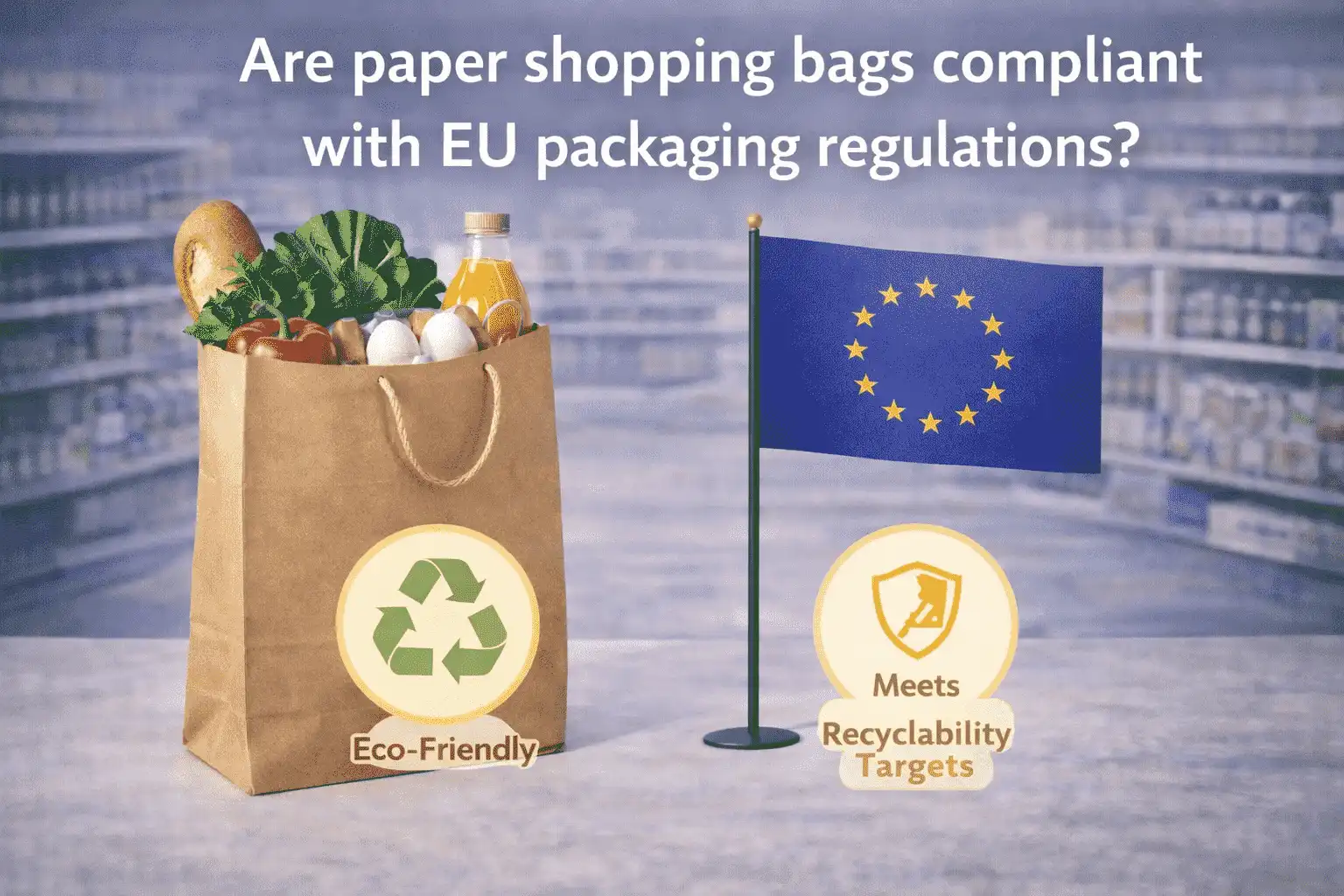
Understanding EU Packaging Regulations for Paper Shopping Bags
The European Union has established comprehensive packaging legislation designed to minimize environmental impact while ensuring product safety and consumer protection. For businesses utilizing paper shopping bags, compliance with these regulations is mandatory for market entry and ongoing operations within EU territories. The primary legislative framework governing packaging materials includes the Packaging and Packaging Waste Directive, which has undergone significant amendments to address circular economy principles and sustainability targets. Paper shopping bags manufactured for the EU market must satisfy multiple regulatory requirements spanning material composition, recyclability standards, labeling obligations, and waste reduction targets. The regulations specifically address heavy metal concentrations in packaging materials, requiring that the sum of lead, cadmium, mercury, and hexavalent chromium does not exceed 100 parts per million. This threshold ensures that paper shopping bags and their printing inks, coatings, and adhesives remain safe throughout their lifecycle, from production through recycling or disposal. Furthermore, the Essential Requirements outlined in the Packaging Directive mandate that all packaging, including paper shopping bags, be manufactured to minimize volume and weight while maintaining necessary safety and hygiene standards. This means that manufacturers must demonstrate their paper shopping bag designs optimize material usage without compromising structural integrity or functionality. Companies must provide technical documentation proving compliance with these weight and volume minimization requirements, which has driven innovation in paper engineering and bag construction methods.
Material Selection and FSC Certification Requirements
Selecting appropriate materials for paper shopping bags destined for EU markets requires careful consideration of both regulatory compliance and environmental credentials. The Forest Stewardship Council certification has become increasingly important as EU retailers and consumers demand verifiable proof of sustainable sourcing. FSC-certified paper shopping bags demonstrate that raw materials originate from responsibly managed forests that provide environmental, social, and economic benefits. Premium materials like SBS C1S and SBS C2S paperboard offer excellent compliance profiles for paper shopping bags serving European markets. These virgin fiber materials provide the bright white appearance and superior print surface that luxury brands require while maintaining full recyclability within established EU waste streams. The coated surfaces accept various finishing techniques including UV coating, foil stamping, and embossing, allowing brands to create distinctive paper shopping bags that meet both aesthetic and regulatory requirements. When sourced with FSC certification, these materials align perfectly with EU sustainability mandates and consumer expectations for environmental responsibility.
Brown kraft paper represents another compliant option for paper shopping bags targeting eco-conscious European consumers. This unbleached material retains its natural brown color and visible fiber texture, creating an authentic appearance that resonates with organic and artisanal brands. The high tensile strength and tear resistance of kraft paper ensure paper shopping bags can withstand typical retail use while remaining fully recyclable and biodegradable. The material's inherent sustainability credentials, combined with FSC certification, position kraft paper shopping bags as ideal solutions for brands emphasizing environmental values in EU markets. CCNB paperboard, manufactured from recycled fibers with a clay-coated printing surface, offers cost-effective compliance for paper shopping bags in price-sensitive applications. The high recycled content directly supports EU circular economy objectives while the reliable print performance enables attractive branding. This material choice demonstrates commitment to resource efficiency and waste reduction, core principles embedded throughout EU packaging regulations. When properly designed and manufactured, CCNB paper shopping bags meet all essential requirements while providing significant material cost advantages compared to virgin fiber alternatives.
Recyclability and Waste Management Compliance
EU regulations place substantial emphasis on packaging recyclability, establishing clear targets for member states to achieve specific collection and recycling rates. Paper shopping bags benefit from well-established recycling infrastructure throughout Europe, where paper and cardboard consistently achieve high recovery rates. However, manufacturers must ensure their paper shopping bag designs facilitate rather than hinder the recycling process through careful attention to material combinations and component integration. Single-material paper shopping bags present the most straightforward recycling pathway and highest compliance confidence. When constructed entirely from paper-based materials, including twisted paper handles or die-cut handles integrated into the bag structure, these designs enter existing paper recycling streams without requiring separation or special processing. This approach aligns with EU extended producer responsibility principles, which increasingly hold manufacturers accountable for end-of-life management of their packaging. Brands utilizing single-material paper shopping bags can confidently communicate recyclability to European consumers and demonstrate regulatory compliance to authorities.
Handle selection significantly impacts the recyclability profile of paper shopping bags in EU markets. While cotton rope handles and satin ribbon handles offer premium aesthetics and carrying comfort, they introduce multi-material complexity that can complicate recycling. European recycling facilities prefer packaging components that can be processed together without manual separation. Twisted paper handles provide an optimal solution, delivering adequate strength and brand customization potential while maintaining full recyclability alongside the paper shopping bag body. This design choice supports compliance with EU preferences for mono-material packaging that facilitates circular economy objectives. Printing and surface finishing decisions also affect paper shopping bag compliance with EU recyclability standards. Water-based inks and coatings generally present fewer recycling obstacles than solvent-based alternatives, and many European recyclers have adapted processes to handle UV coatings and other common finishes applied to paper shopping bags. However, excessive coating coverage or certain metallic treatments may impact recyclability and require disclosure in technical documentation. Manufacturers serving EU markets should consult current recycling guidelines and work with certified facilities to verify that their paper shopping bag specifications maintain recyclability while achieving desired visual effects.
Labeling and Documentation Requirements
EU packaging regulations establish specific labeling and documentation obligations that manufacturers and importers must satisfy for paper shopping bags entering European commerce. These requirements ensure traceability, facilitate proper waste sorting, and provide consumers with information necessary for responsible disposal. Non-compliance with labeling regulations can result in market access denial, product recalls, and financial penalties, making proper attention to these details essential for successful EU operations. The conformity marking requirements mandate that packaging manufacturers maintain technical documentation demonstrating compliance with Essential Requirements. For paper shopping bags, this documentation must include material specifications, recyclability information, and evidence of compliance with heavy metal limitations. Many EU member states also require that packaging display recycling symbols indicating material type and disposal instructions. The widely recognized recycling symbol with numerical codes helps consumers correctly sort paper shopping bags for recycling collection, supporting achievement of EU waste management targets.
Importers of paper shopping bags into EU markets bear significant compliance responsibilities under the regulations. They must verify that manufacturers have met all applicable requirements and must ensure proper labeling before products enter free circulation. This includes confirming FSC or similar certification claims, verifying material composition declarations, and ensuring recycling information accurately reflects the paper shopping bag design. Companies sourcing paper shopping bags from manufacturers outside the EU should establish clear compliance protocols and request comprehensive documentation supporting all regulatory claims before shipping products to European destinations. Extended producer responsibility schemes operating in various EU member states may impose additional reporting and financial obligations on companies placing paper shopping bags on the market. These schemes require registration and regular reporting on packaging quantities, materials, and weights. Many countries assess fees based on packaging tonnage to fund collection and recycling infrastructure. Businesses utilizing paper shopping bags across multiple EU markets must navigate varying national implementations of these producer responsibility requirements, often necessitating partnerships with compliance organizations that manage multi-country obligations.
Manufacturing Standards and Quality Assurance
Achieving consistent compliance with EU packaging regulations requires robust manufacturing standards and quality assurance systems for paper shopping bag production. The ISO 9001 Quality Management System certification provides a framework for controlling production processes, maintaining documentation, and implementing continuous improvement. For paper shopping bags destined for EU markets, quality management systems must specifically address regulatory compliance verification, material traceability, and testing protocols that confirm finished products meet all applicable requirements. Environmental management system certification under ISO 14001 demonstrates commitment to minimizing environmental impacts throughout paper shopping bag manufacturing operations. This certification has become increasingly relevant as EU regulations emphasize lifecycle environmental performance and circular economy principles. Manufacturers with certified environmental management systems can more effectively track resource consumption, optimize material usage, and document sustainability improvements that support compliance with EU packaging efficiency requirements. These systems also position manufacturers to adapt as regulations evolve toward increasingly stringent environmental standards.
The production process for compliant paper shopping bags requires careful control at each stage, from printing through assembly. Offset, digital, and flexographic printing methods all can produce EU-compliant results when properly implemented with appropriate inks and color management systems. G7 color management certification ensures consistent color reproduction across production runs, important for brand integrity and for maintaining efficient material usage through reduced waste from color matching failures. Surface finishing operations including coating, lamination, and foil stamping must be executed with materials and techniques that preserve paper shopping bag recyclability while delivering desired aesthetic effects. Die-cutting, gluing, and handle attachment operations demand precision to ensure paper shopping bags meet structural requirements without excessive material usage. Manufacturers must validate that bag dimensions, weight capacity, and durability satisfy brand specifications while minimizing material consumption in accordance with EU packaging efficiency mandates. Quality control testing should verify handle attachment strength, bag burst resistance, and overall construction integrity. Documentation of these quality metrics supports compliance demonstrations and provides evidence that paper shopping bags achieve necessary performance with optimized material usage.
Conclusion
Yes, paper shopping bags can achieve full compliance with EU packaging regulations through proper material selection, design optimization, and manufacturing controls that address recyclability, labeling, and environmental performance requirements.
Cooperate with GUANGZHOU FETCHING COLOR PRINTING & PACKAGING LTD.
Partner with a China paper shopping bag manufacturer that understands EU compliance requirements. As a leading China paper shopping bag supplier and China paper shopping bag factory, GUANGZHOU FETCHING COLOR PRINTING & PACKAGING LTD. offers High Quality paper shopping bag solutions at competitive paper shopping bag prices. Our China paper shopping bag wholesale capabilities, backed by 25 years of experience, 300+ employees, and 35,000 m² production facilities serving over 1,000 loyal customers, ensure paper shopping bags for sale meet all regulatory standards. With FSC certification, ISO 9001, ISO 14001, and comprehensive quality systems, we manufacture compliant paper shopping bags using SBS, kraft, and recycled materials with customized handles and printing. Our R&D team of ten senior packaging engineers provides material selection guidance, structure development, and compliance documentation supporting seamless EU market entry. Contact us at public@fetchingprinting.com to discuss your paper shopping bag requirements and receive expert consultation on achieving EU regulatory compliance while maintaining your brand's distinctive aesthetic.
References
1. European Commission, Directorate-General for Environment. "Packaging and Packaging Waste Directive: Essential Requirements." Official Journal of the European Union, Brussels, Belgium.
2. Forest Stewardship Council International. "FSC Certification Standards for Chain of Custody: Paper and Packaging Products." FSC International Center, Bonn, Germany.
3. European Committee for Standardization. "EN 13432: Requirements for Packaging Recoverable through Composting and Biodegradation." CEN-CENELEC Management Centre, Brussels, Belgium.
4. Organisation for Economic Co-operation and Development. "Extended Producer Responsibility: Updated Guidance for Efficient Waste Management." OECD Publishing, Paris, France.
5. European Paper Recycling Council. "European Declaration on Paper Recycling: Monitoring Report on Paper Recycling and Recovery Rates." EPRC Secretariat, Brussels, Belgium.

Based on your location and order quantity, you will have the opportunity to receive a limited time free shipping promotion!

Corporate Purpose